Marine habitat

The Marine System encompasses all coastal areas not appreciably diluted by freshwater (surface salinities seldom falling below 30 ppt), including open coastal areas, straits, and euhaline inland waters.  It can extend from the outer edge of the continental shelf to (1) the landward limit of tidal inundation or wave splash or (2) the seaward limit of the Estuarine System.

Source:

Dethier, M.N. 1990. A marine and estuarine habitat classification system for Washington State. Natural Heritage Program, WA DNR, Olympia, WA. 60 pp.

Overview

Each year, the Puget Sound Ecosystem Monitoring Program releases the annual Puget Sound Marine Waters Overview report. The latest report combines a wealth of data from comprehensive monitoring programs and provides a concise summary of what was happening in Puget Sound’s marine waters during 2022. The report represents the collective effort of 84 contributors from federal, tribal, state, and local agencies, academia, nonprofits, and private and volunteer groups.


Image of a sailboat on the water at sunset.Text overlay reads: Puget Sound Marind Waters 2022 Overview.

Related Articles

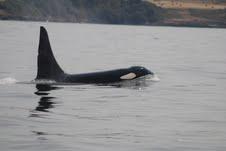
This 2004 report looks at the status of Washington's four killer whale populations.

A master's thesis prepared at Western Washington University discusses the impact of harbor seals on fish stocks in the San Juan Islands, where the seals are a year-round predator.

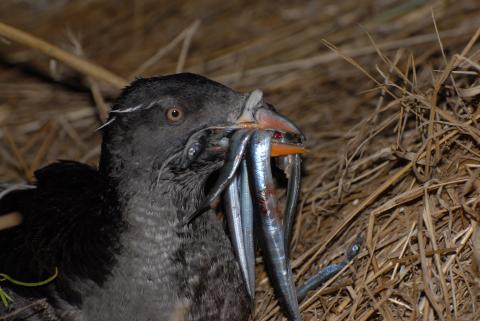
A paper in the May 2013 issue of The Condor [115(2):356–365, 2013] describes a repeatable and statistically robust approach to monitoring burrow nesting seabirds in the Salish Sea and the California Current that can be applied at single- or multi-island scales. The approach can be applied to both relatively common and important members of the seabird community like the Rhinoceros Auklet and to species of conservation concern like the Tufted Puffin.

The authors provide an approach for simultaneously gathering and identifying habitat information that influences burrow density. This habitat information can in turn be used to inform restoration activities or

A new Chinook monitoring framework is designed to build cooperation among managers and policymakers working across the Puget Sound watershed. The report, prepared by an independent team of scientists and released by NOAA, includes a regionally specific, common classification system for Chinook habitats and key ecological attributes. 

The Puget Sound Recovery Implementation Technical Team has released a draft of a NOAA technical memorandum describing frameworks for adaptive management and monitoring of Chinook salmon in Puget Sound. Download the report.

Eelgrass (Zostera marina L.) is an aquatic flowering plant common in tidelands and shallow waters along much of Puget Sound’s shoreline. It is widely recognized for its important ecological functions, and provides habitat for many Puget Sound species such as herring, crab, shrimp, shellfish, waterfowl, and salmonids.