Marine habitat

The Marine System encompasses all coastal areas not appreciably diluted by freshwater (surface salinities seldom falling below 30 ppt), including open coastal areas, straits, and euhaline inland waters.  It can extend from the outer edge of the continental shelf to (1) the landward limit of tidal inundation or wave splash or (2) the seaward limit of the Estuarine System.

Source:

Dethier, M.N. 1990. A marine and estuarine habitat classification system for Washington State. Natural Heritage Program, WA DNR, Olympia, WA. 60 pp.

Overview

Each year, the Puget Sound Ecosystem Monitoring Program releases the annual Puget Sound Marine Waters Overview report. The latest report combines a wealth of data from comprehensive monitoring programs and provides a concise summary of what was happening in Puget Sound’s marine waters during 2022. The report represents the collective effort of 84 contributors from federal, tribal, state, and local agencies, academia, nonprofits, and private and volunteer groups.

Image of a sailboat on the water at sunset.Text overlay reads: Puget Sound Marind Waters 2022 Overview.

Related Articles

Download presentations from the Study Panel on Ecosystem-based Management of Forage Fish held August 25, 2013 at the University of Washington’s Friday Harbor Lab, San Juan Island.

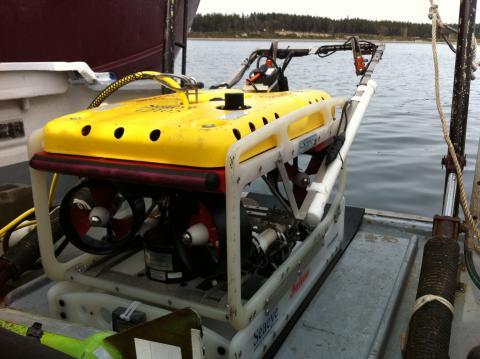
Remotely Operated Vehicles (ROVs) and Autonomous Underwater Vehicles (AUVs) are underwater robotic vehicles used for a variety of ocean surveys and operations. Both are used for deep-sea observation, mapping of underwater environments, and surveys of biodiversity and water quality trends. While ROVs are tethered to the user by a cord called the umbilical, which provides power as well as control and video signals, AUVs are programmed for a specific course and then set loose, operating without a tether.

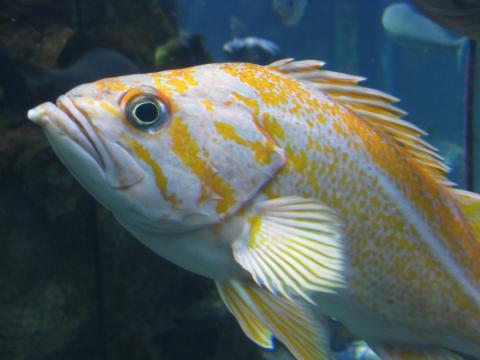
The National Marine Fisheries Service has released a Draft Biological Report proposing designation of critical habitat for yelloweye rockfish, canary rockfish, and bocaccio in the Salish Sea. Download the full report and supporting data.

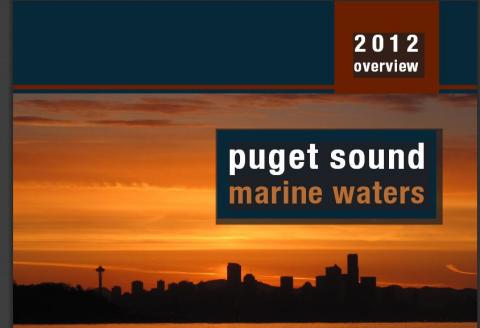
The Puget Sound Marine Waters 2012 Overview from the Puget Sound Ecosystem Monitoring Program synthesizes conditions measured in 2012 and has been expanded to include observations on seabirds that rely on marine waters. Read an excerpt below, or download the full report.

The audio files below are excerpts from a May 2013 interview with Donald Malins, former Director of the Environmental Conservation Division of NOAA Fisheries. Research by Malins and his colleagues in the 1970s and mid-1980s revealed high levels of industrial toxics in sediment-dwelling fish in Puget Sound, leading to the creation of Superfund sites in the Duwamish Estuary and Commencement Bay. Read a full profile of Donald Malins. The interview was conducted by Richard Strickland and Randy Shuman in cooperation with the Encyclopedia of Puget Sound as part of the Puget Sound Voices series. Additional assistance was provided by Jake Strickland. 

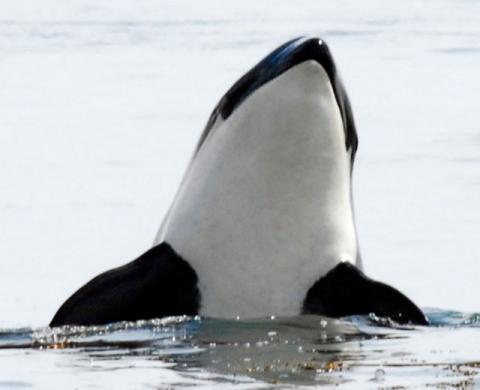
The U.S. Environmental Protection Agency Region 10 and the National Marine Fisheries Service Northwest Region have released a report describing results from a series of technical workgroups about the potential effects of polybrominated diphenyl ethers (PBDEs) on Puget Sound and Southern Resident killer whales.