Nearshore habitat

The nearshore habitat of Puget Sound is usually defined as the area from the bluffs that line the shore to the area where water becomes too deep for light to penetrate and allow plants to grow, measured relative to mean lower low water (MLLW). It includes marine habitat and estuarine habitat, but stops at the farthest reach of the tide into an estuary, or the point where saltwater no longer mixes with fresh. Within Puget Sound’s nearshore are many varied habitat types, including rocky and sandy beaches, mudflats, salt marshes, kelp and eelgrass beds, and lagoons.

Sources:

Puget Sound Nearshore Ecosystem Restoration Project: http://www.pugetsoundnearshore.org/technical_reports.html.

Overview

The Puget Sound Nearshore Ecosystem Restoration Project (PSNERP) works to assess the health of Puget Sound nearshore environments and provides strategies for their protection and restoration. 

PSNERP logo

Related Articles

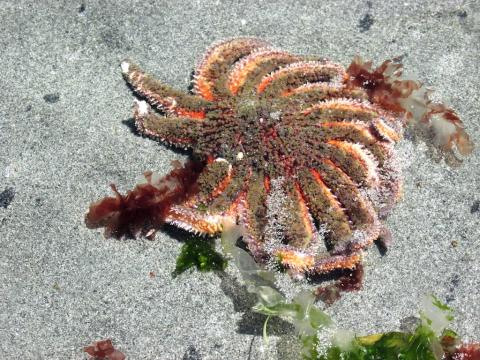
The sunflower sea star (Pycnopodia helianthoides) is highly susceptible to sea star wasting disease. The authors of a 2019 paper published in Science Advances document the rapid, widespread decline of sunflower stars and discuss the ecological implications of losing this important subtidal predator species.

Puget Sound’s only native oysters were nearly wiped out in the 19th century from overharvesting. Now a network of scientists and advocates is working to restore them to their historical and cultural prominence.

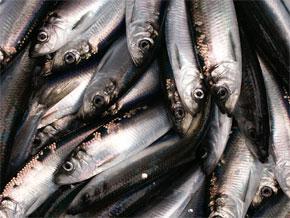
Pacific herring are a pelagic fish species found from northern Baja California to northern Honshu Island, Japan. They are found throughout the Puget Sound basin and are a mix of “resident” and “migratory” stocks. 

New research shows that warmer and more acidic oceans could lead to shorter embryos and higher respiration in Pacific herring.

Scientists argue that herring managers should take a tip from stock market investors and diversify the population’s “portfolio.” 

A 2018 paper in the journal Ocean and Coastal Management examines and compares planning approaches used to develop marine protected areas and estuary restoration projects in Puget Sound. It finds that management policies can benefit from increasingly collaborative planning with a focus on multiple benefits such as flood control, salmon recovery, recreation and resilience to climate change.