

All Articles
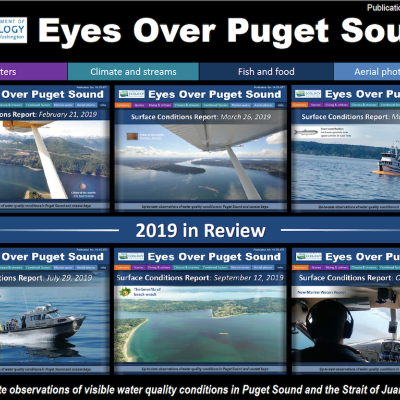
Eyes Over Puget Sound: 2019 Year in Review
The Washington State Department of Ecology has prepared a summary review of its Eyes Over Puget Sound surface condition reports from 2019. The year started with snow, and a summer drought kept river flows low. As a result, salinities in Puget Sound were elevated year round. Warmer surface water temperatures in spring gradually extended to greater depth by late summer. The spring bloom was strong
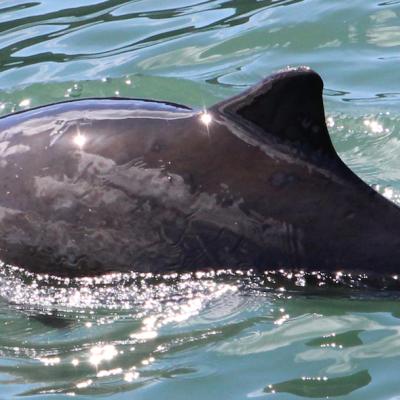
Status and trends of harbor porpoises in the Salish Sea
Harbor porpoises declined dramatically in the Salish Sea in the 1970s but their populations have since rebounded, increasing by more than 10% per year in recent decades. A 2020 report for the Encyclopedia of Puget Sound examines harbor porpoise status and trends, natural history and recent policy considerations for the species.
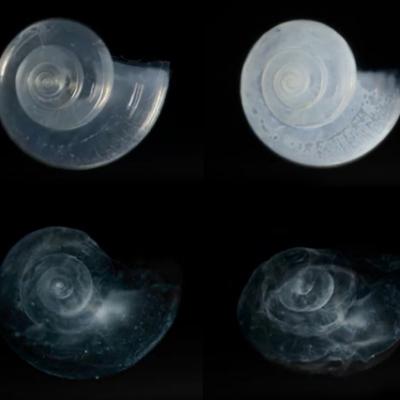
Rate of ocean acidification may accelerate, scientists warn
Last summer, scientists met at the University of Washington to address alarming findings concerning the rapid acidification of the world's oceans. Experts at that symposium warned that wildlife in the Salish Sea, from salmon to shellfish, may start to see significant effects from changing water chemistry within the next 10 to 20 years. This article summarizes the symposium's key findings and was

A health check for seabirds
Scientists are still trying to understand what caused the deaths of thousands of rhinoceros auklets in the Salish Sea in 2016. Some studies point to disease as a central factor in that incident and potentially other large seabird die-offs along the coast. That is prompting a deeper look at what makes these birds sick, and how local populations are faring. We followed a group of researchers as they

Genetic composition and conservation status of coastal cutthroat trout in the San Juan Islands, Washington
The watersheds of Washington’s San Juan Islands were thought to be too small to support wild salmonid populations, and many streams flow only seasonally. But a 2019 article in the journal Conservation Genetics reports that at least five watersheds in the region support populations of coastal cutthroat trout (Oncorhynchus clarki clarki). Genetic analysis of the cutthroat trout in three of the
2019 State of the Sound Report
The 2019 State of the Sound is the Puget Sound Partnership’s sixth biennial report to the Legislature on progress toward the recovery of Puget Sound by 2020. The document reports on both the status of the Partnership's recovery efforts and the status of a suite of ecosystem indicators.
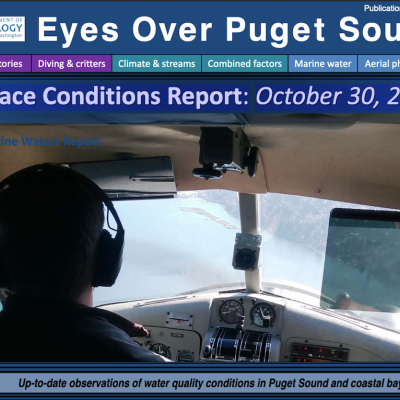
Eyes Over Puget Sound: Surface Conditions Report - October 30, 2019
After a dry early summer followed by more than expected rain, rivers mostly remained lower than in 2018. In October air temperatures dropped, but water temperatures remained warm enough for spawning anchovies in South and Central Sound and herring and salmon optimal growth in Whidbey Basin. By the end of October many red-brown blooms vanished, yet the waters of South Sound are still green, adorned

Kelp crisis? Decline of underwater forests raises alarms
They rival tropical forests in their richness and diversity, but Puget Sound's kelp beds have declined steeply in recent decades. Scientists are just starting to understand the extent of these losses. What they are finding is bringing kelp to the forefront of Puget Sound's environmental concerns.
2018 Puget Sound Marine Waters Overview
A new report from the Puget Sound Ecosystem Monitoring Program says climate change altered the base of Puget Sound's food web in 2018, diminishing microscopic phytoplankton necessary for marine life. Scientists also observed lower abundances of fish, seabirds, and marine mammals.
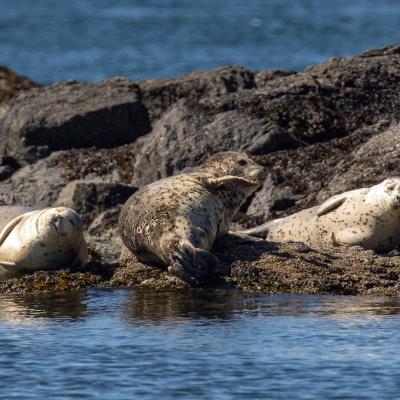
The occurrence of heavy metals in harbor seals of the San Juan Islands
A 2019 article in the Journal of Wildlife Diseases looked at trace element concentrations of heavy metals in the livers of harbor seals that died and stranded in the San Juan Islands. The study indicated exposure to trace elements (naturally occurring, human-introduced, or both) in the Salish Sea; however, the study reports that trace element toxicity is not a major threat to harbor seal health.