

All Articles
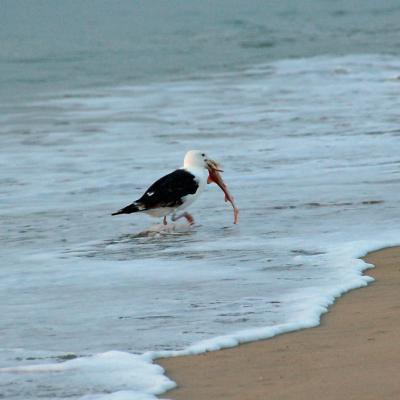
Food web connections beyond the marine areas of Puget Sound
Food webs are natural interconnections of food chains and depict what-eats-what in an ecological community. While Puget Sound represents a specific food web, the organisms that reside within that web often travel outside the region. In this way, one community's food web can be drastically affected by a change in a neighboring ecosystem.
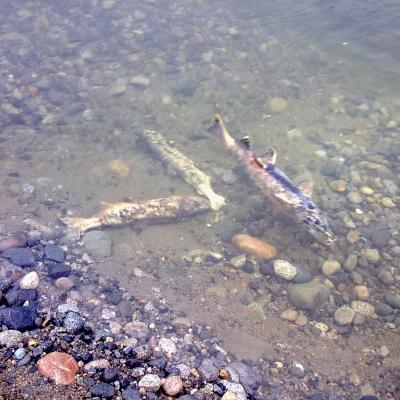
Transfer of nutrients in the ecosystem
Decaying organic matter plays an important role in marine ecosystems.
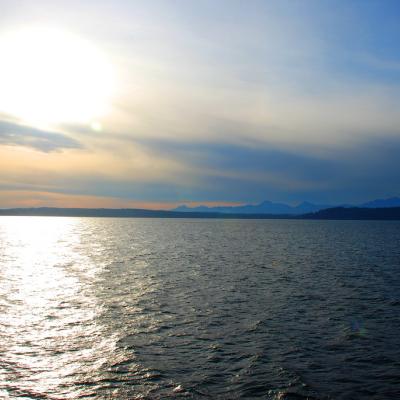
Water and nutrient circulation in Puget Sound
Complex physical processes such as hydrology, nutrient cycling, and sediment transport are linked to water circulation patterns in Puget Sound.
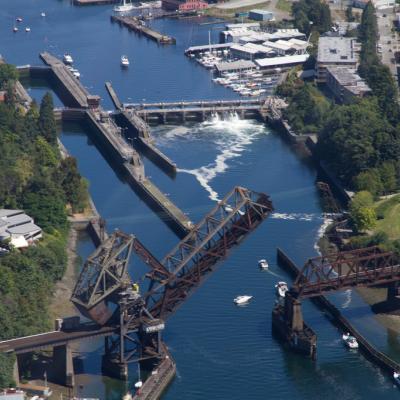
Will Ballard Locks withstand a major earthquake?
For close to 100 years, Seattle's Ballard Locks has been one of the region's busiest waterways, drawing major boat traffic along with millions of tourists. But as it prepares to celebrate its centennial, the aged structure is also drawing the concern of engineers. They worry that an earthquake could cause the locks to fail, draining massive amounts of water from Lake Washington and Lake Union. In
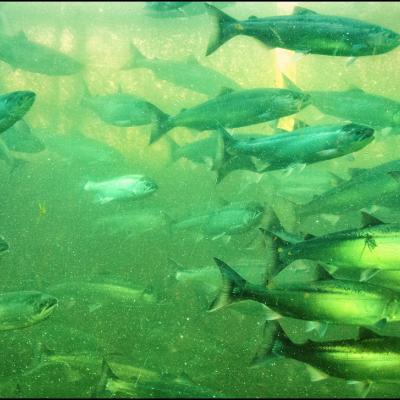
Salmon live in a topsy-turvy world upstream of the Ballard Locks
Chinook, coho and sockeye salmon, along with steelhead trout, live in the Lake Washington watershed and navigate a treacherous route through the Ballard Locks on their way to Puget Sound.
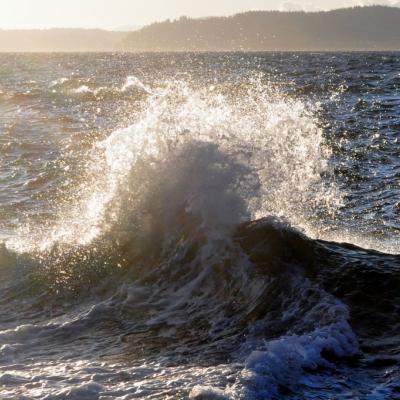
Climate and ocean processes
This overview discusses the processes that control ocean and climate characteristics. Topics include atmospheric forcing, precipitation patterns, oscillation trends, coastal upwelling, and climate change.
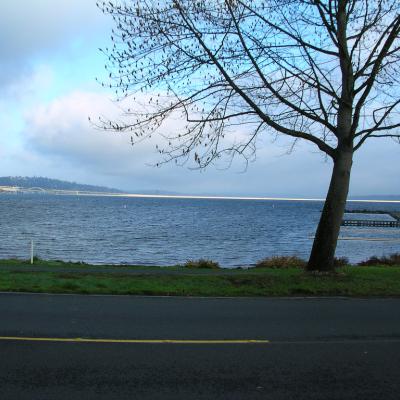
Cleaning up Lake Washington
Lake Washington was heavily contaminated by untreated sewage until extensive pollution controls by the city of Seattle.
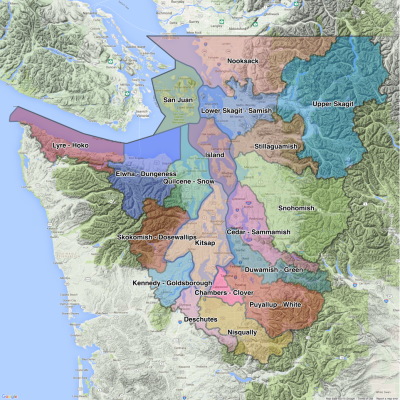
Geographic boundaries of Puget Sound and the Salish Sea
The boundaries of Puget Sound and the Salish Sea are not always consistently defined by scientists and government agencies. This article clarifies the distinctions between oceanographic and watershed-based definitions of these geographic areas.
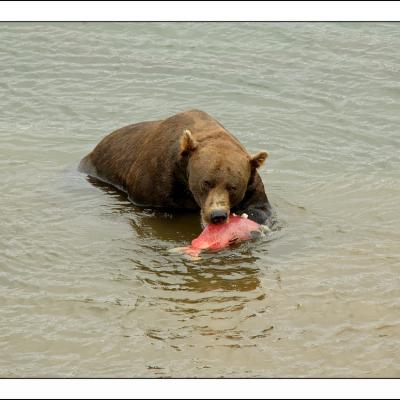
Food webs
The health of an ecosystem is tied closely to the health of its food webs. This article provides an overview of the concept, origin, and characteristics of a food web and how predator and prey relationships are shaped in the Salish Sea.
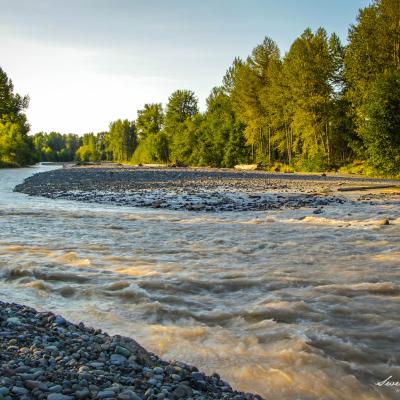
Land cover conversion and ecosystem decline
Land cover conversion through human development was listed as a leading cause of ecosystem decline in the 2014 Puget Sound Pressures Assessment, a document supported by the Environmental Protection Agency and prepared by more than 60 of the region's scientists.