

All Articles
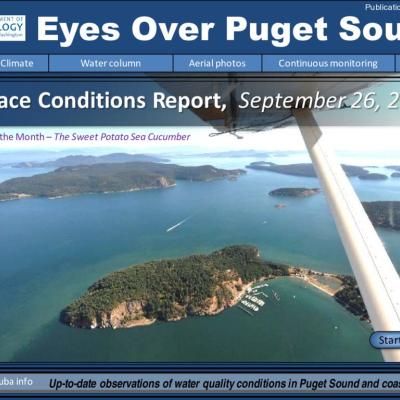
Eyes Over Puget Sound: Surface Conditions Report – September 26, 2016
September is jellyfish season and they are everywhere in southern Puget Sound! Sunny, warm, and dry conditions promoted strong late-summer plankton blooms in colors of red, green, and brown, now widespread in many bays. In contrast, Central Sound looks clear with low algal activity. Southern Puget Sound has large floating mats of organic material and developed lower oxygen in August. Meet the
2015 Puget Sound Marine Waters Overview
The Puget Sound Ecosystem Monitoring Program released its fifth annual Marine Waters Overview this week. The report provides an assessment of marine conditions for the year 2015 and includes updates on water quality as well as status reports for select plankton, seabirds, fish and marine mammals.
- Algae
- Circulation
- Climate change
- Disease
- Eutrophication
- Forage fish
- Harbor porpoise
- Harmful algal blooms
- Hypoxia
- Marine birds
- Marine habitat
- Marine Waters Overview
- Monitoring
- Reports
- Salmonids
- Selected publications
- Sewage and fecal pollution
- Shellfish
- Species and food webs
- Stormwater
- Water quality
- Water quantity
- Estuaries
- Nearshore habitat
- Freshwater habitat
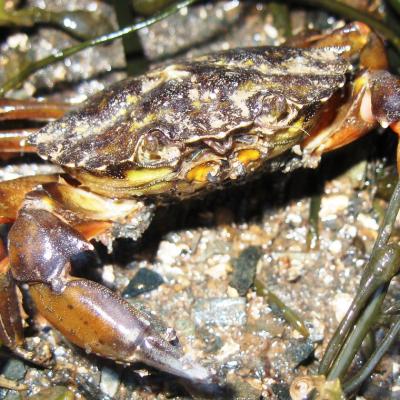
Second invasive green crab found in Puget Sound
Another European green crab has been spotted in Puget Sound prompting concern that the species may gain a foothold in the region.
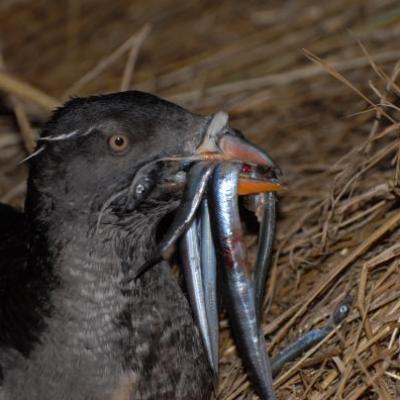
Salish Sea snapshots: Plastics in fish may also affect seabirds
Sand lance in parts of British Columbia are ingesting small pieces of plastic that may be passed through the food web.
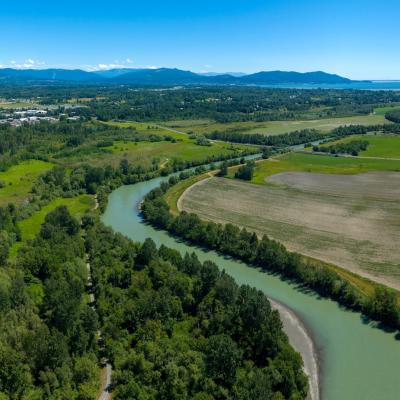
Controlling nutrients in the watershed
A state plan calls for reductions in nutrients across 163 distinct watersheds in Puget Sound, including non-point-source pollution. Agencies and restoration practitioners are looking at ways to measure the problem and get the word out about ways to control it. This article is part of an occasional series on nutrient pollution in Puget Sound.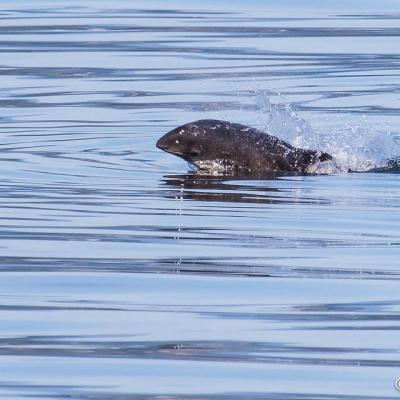
The return of the pig
After an almost complete collapse in the 1970s, harbor porpoise populations in Puget Sound have rebounded. Scientists are celebrating the recovery of the species sometimes known as the "puffing pig."
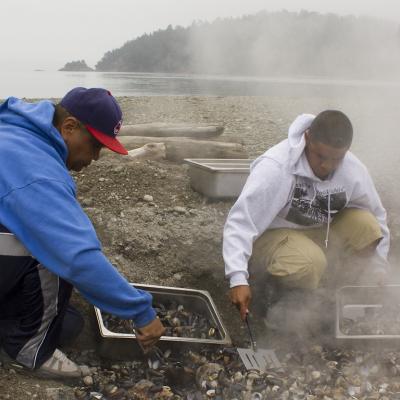
Clam hunger
Social scientists around the Salish Sea are predicting the effects of environmental change through the lens of culturally important foods.
A comparative study of human well-being indicators across three Puget Sound regions
A 2016 paper in the journal Society and Natural Resources looks at the creation of human well-being indicators across three regions in the Puget Sound watershed. The author suggests that overarching domains for these indictors might be applied more broadly in other environmental contexts.
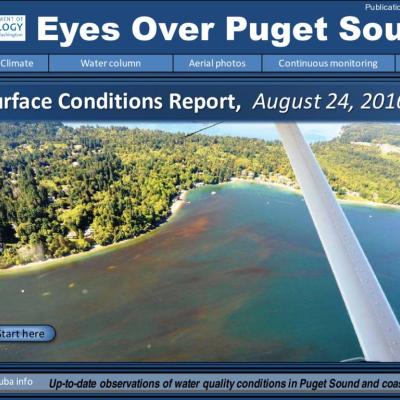
Eyes Over Puget Sound: Surface Conditions Report – August 24, 2016
In July, conditions were normalizing, yet river flows remained lower, continuing into August. July also saw lower oxygen appearing in southern Puget Sound. By August, jellyfish are occurring in high numbers in Eld and Budd Inlet. South Puget Sound has Noctiluca drifting at the surface in large orange lines in many places and red-brown blooms widespread in finger inlets, as well as in Sinclair
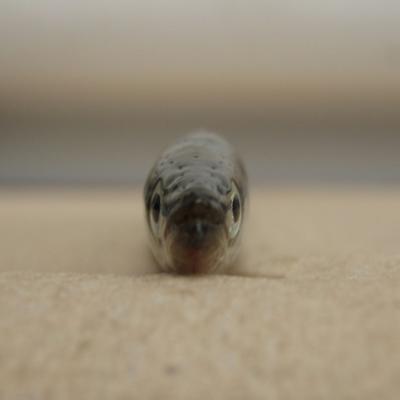
The secret lives of forage fish: Where do they go when we aren’t looking?
Some of the most important fish in the Salish Sea food web are also the most mysterious. Researchers have only begun to understand how many there are, where they go, and how we can preserve their populations for the future. A University of Washington researcher describes how scientists are looking into the problem.