

All Articles
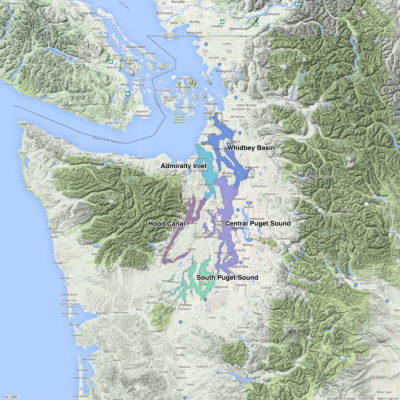
Puget Sound's physical environment
The Puget Sound ecosystem is shaped by its physical environment. This article looks at Puget Sound's geologic history as well as dynamic factors such as the flow of its rivers and currents.
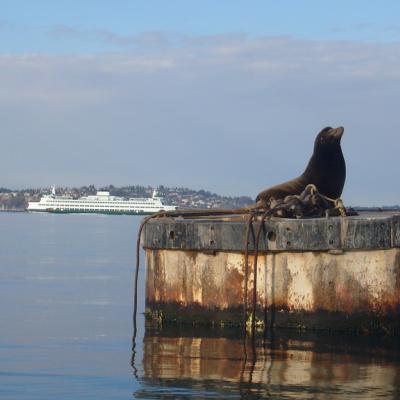
Study says predators may play major role in chinook salmon declines
A new study shows that increased populations of seals and sea lions are eating far more of Puget Sound’s threatened chinook than previously known, potentially hampering recovery efforts for both salmon and endangered killer whales.
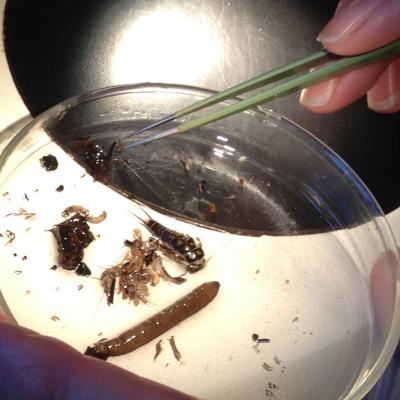
Healthy stream, healthy bugs
Many groups have been formed around the goal of saving salmon, but few people talk about a concerted effort to save microscopic creatures. Whether or not a pro-bug movement catches on, future strategies to save salmon are likely to incorporate ideas for restoring streambound creatures known as benthic invertebrates.
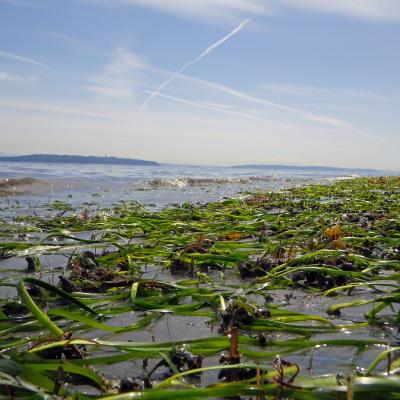
Eelgrass in Puget Sound is stable overall, but some local beaches suffering
Eelgrass, a marine plant crucial to the success of migrating juvenile salmon and spawning Pacific herring, is stable and flourishing in Puget Sound, despite a doubling of the region’s human population and significant shoreline development over the past several decades. [Story reprinted from UW Today.]
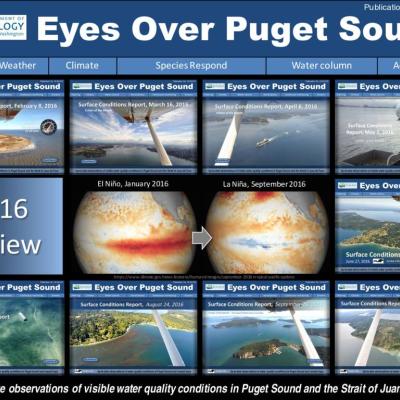
Eyes Over Puget Sound: Surface Conditions Report – December 2016 Review
The year 2016 in pictures: After two years of very warm air and record high water temperatures starting with the Blob (2015) and followed by El Nino (2016), temperatures have fallen and remain slightly warmer than normal in Puget Sound. Very low summer river flows (e.g., Fraser River) reflect climatic predictions for the NW. Record temperatures and low salinities occurred alongside observations of

Implementation Strategies will target Puget Sound ‘Vital Signs’
New EPA-funded Implementation Strategies are designed to target Puget Sound recovery in the most direct and coordinated way ever conducted by state and federal agencies. We report on how these strategies will affect Puget Sound’s Vital Signs for years to come, and why you should care (a lot).
Puget Sound marine and nearshore grant program results, final analysis report
A September 2016 report from the University of Washington Puget Sound Institute provides an overview of key products, results, and recommendations presented in three previous reports reviewing 50 projects from the first four years of the Puget Sound Marine and Nearshore Grant Program.
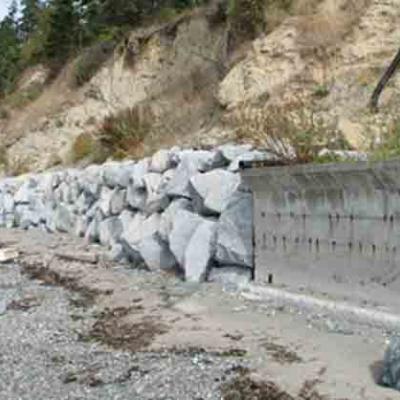
Shoreline Armoring in an inland sea: Science-based recommendations for policy implementation
A 2016 article in the journal Conservation Letters makes policy recommendations to address shoreline armoring in the Salish Sea.
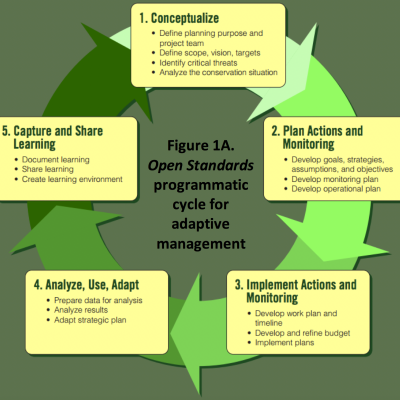
Adaptive management: What, why, and how?
A "learn and adjust" strategy known as adaptive management plays a central role in state and federal Puget Sound recovery efforts. It is an approach that is gaining traction for ecosystem management worldwide. A December 2016 article from the Puget Sound Institute provides an overview of the concept and how it is being applied locally.
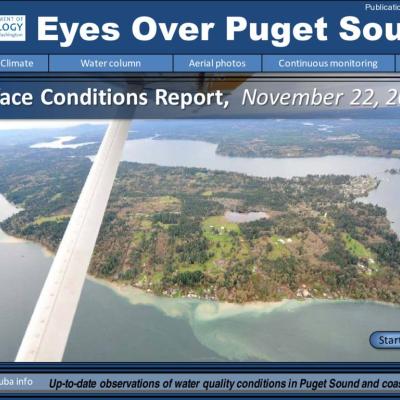
Eyes Over Puget Sound: Surface Conditions Report – November 22, 2016
ENSO is in a cold phase (La Niña) and it is wetter and warmer than normal. Strong precipitation in October greatly improved Puget Sound streamflows. At the coast, we had strong downwelling. As a result, water temperatures, salinities, and oxygen in Puget Sound are returning to normal. While surface water in Puget Sound has cooled, it is still warmer than in the Straits. Surprisingly, masses of