Marine habitat

The Marine System encompasses all coastal areas not appreciably diluted by freshwater (surface salinities seldom falling below 30 ppt), including open coastal areas, straits, and euhaline inland waters.  It can extend from the outer edge of the continental shelf to (1) the landward limit of tidal inundation or wave splash or (2) the seaward limit of the Estuarine System.

Source:

Dethier, M.N. 1990. A marine and estuarine habitat classification system for Washington State. Natural Heritage Program, WA DNR, Olympia, WA. 60 pp.

Overview

Each year, the Puget Sound Ecosystem Monitoring Program releases the annual Puget Sound Marine Waters Overview report. The latest report combines a wealth of data from comprehensive monitoring programs and provides a concise summary of what was happening in Puget Sound’s marine waters during 2022. The report represents the collective effort of 84 contributors from federal, tribal, state, and local agencies, academia, nonprofits, and private and volunteer groups.

Image of a sailboat on the water at sunset.Text overlay reads: Puget Sound Marind Waters 2022 Overview.

Related Articles

A 2015 paper in the journal Limnology and Oceanography presents new data on ocean acidification in the Salish Sea.

Hypoxia, defined as dissolved oxygen (DO) concentrations less than 2 mg / L, has become widespread throughout estuaries and semi-enclosed seas throughout the world (Diaz 2001). 

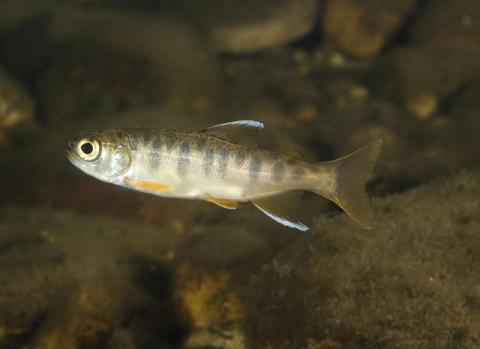
Scientists say low marine survival rates threaten Puget Sound coho salmon populations. A 2015 article in the journal Marine and Coastal Fisheries reports that wild cohos in the Salish Sea had higher smolt survival rates over a 30 year period than hatchery coho salmon. Smolt survival in the Strait of Georgia during that time declined faster than it did in Puget Sound. 

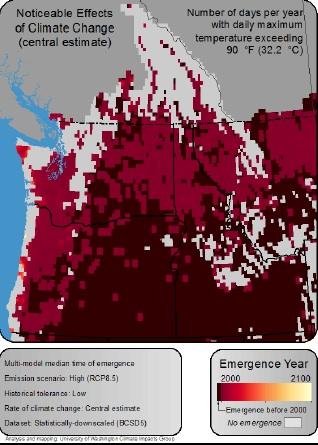
A December 2014 report from the University of Washington examines when and where climate change impacts will occur in the Puget Sound watershed.

When and where will we see the impacts of climate change in Puget Sound? A web-based tool factors in dozens of site-specific variables for watersheds throughout the Pacific Northwest. The resource was developed by the University of Washington Climate Impacts Group with support from the EPA, the US Army Corps of Engineers and the Center for Data Science, University of Washington-Tacoma.

A 2015 paper in the Marine Ecology Press Series reports a trend toward more jellyfish and less of some forage fish species in Puget Sound. The paper analyzes more than 40 years of state data, and assesses potential human causes for the shift.