Marine habitat

The Marine System encompasses all coastal areas not appreciably diluted by freshwater (surface salinities seldom falling below 30 ppt), including open coastal areas, straits, and euhaline inland waters.  It can extend from the outer edge of the continental shelf to (1) the landward limit of tidal inundation or wave splash or (2) the seaward limit of the Estuarine System.

Source:

Dethier, M.N. 1990. A marine and estuarine habitat classification system for Washington State. Natural Heritage Program, WA DNR, Olympia, WA. 60 pp.

Overview

Each year, the Puget Sound Ecosystem Monitoring Program releases the annual Puget Sound Marine Waters Overview report. The latest report combines a wealth of data from comprehensive monitoring programs and provides a concise summary of what was happening in Puget Sound’s marine waters during 2022. The report represents the collective effort of 84 contributors from federal, tribal, state, and local agencies, academia, nonprofits, and private and volunteer groups.

Image of a sailboat on the water at sunset.Text overlay reads: Puget Sound Marind Waters 2022 Overview.

Related Articles

Puget Sound is the second largest estuary in the contiguous United States. Today, we understand that estuaries — where freshwater and saltwater merge — are among the most productive places for life to exist.

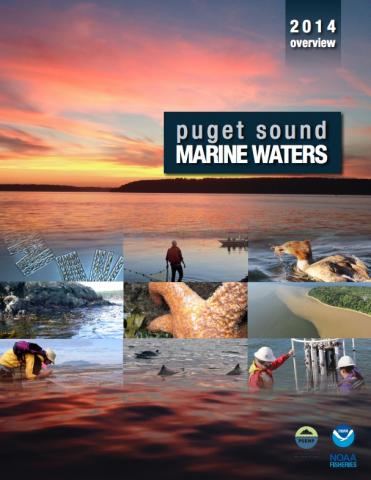
A report from NOAA and the Puget Sound Ecosystem Monitoring Program provides an overview of 2014 marine water quality and conditions in Puget Sound from comprehensive monitoring and observing programs.

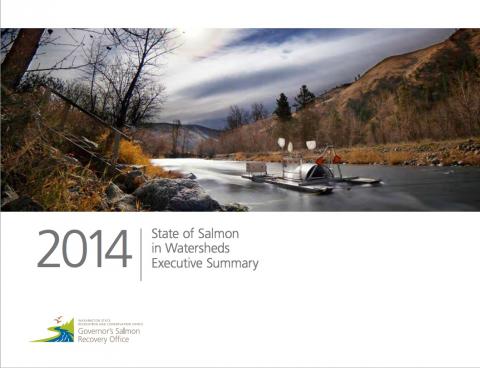
This report documents how Washingtonians have responded to the challenges of protecting and restoring salmon and steelhead to healthy status. It also serves as a tool to summarize achievements, track salmon recovery progress through common indicators, and identify data gaps that need to be filled.

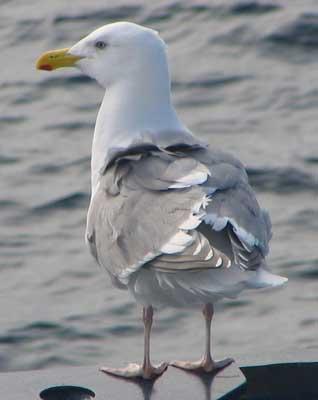
A 2015 article in the journal Environmental Science and Technology presents additional isotopic evidence that glaucus-winged gulls in the Salish Sea are shifting their diets from marine to terrestrial sources due to human impacts. Scientists hypothesize that declining forage fish may be the cause. 

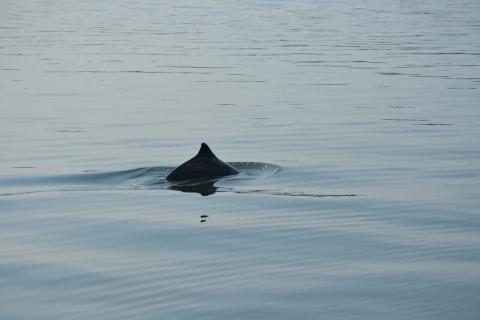
A 2015 paper in the journal Diseases of Aquatic Organisms examines potential causes of increased harbor porpoise strandings in Washington and Oregon.  

This report, Priority science for restoring and protecting Puget Sound: a Biennial Science Work Plan for 2011-2013, identifies priority science and monitoring questions needed to coordinate and implement effective recovery and protection strategies for Puget Sound.