Marine habitat

The Marine System encompasses all coastal areas not appreciably diluted by freshwater (surface salinities seldom falling below 30 ppt), including open coastal areas, straits, and euhaline inland waters.  It can extend from the outer edge of the continental shelf to (1) the landward limit of tidal inundation or wave splash or (2) the seaward limit of the Estuarine System.

Source:

Dethier, M.N. 1990. A marine and estuarine habitat classification system for Washington State. Natural Heritage Program, WA DNR, Olympia, WA. 60 pp.

Overview

Each year, the Puget Sound Ecosystem Monitoring Program releases the annual Puget Sound Marine Waters Overview report. The latest report combines a wealth of data from comprehensive monitoring programs and provides a concise summary of what was happening in Puget Sound’s marine waters during 2022. The report represents the collective effort of 84 contributors from federal, tribal, state, and local agencies, academia, nonprofits, and private and volunteer groups.

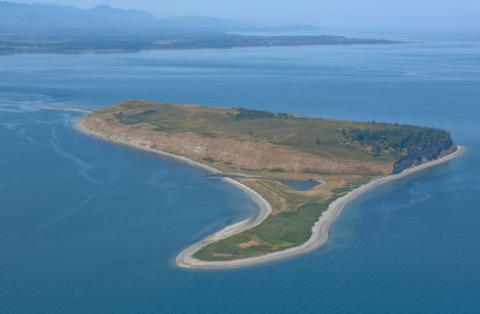
Image of a sailboat on the water at sunset.Text overlay reads: Puget Sound Marind Waters 2022 Overview.

Related Articles

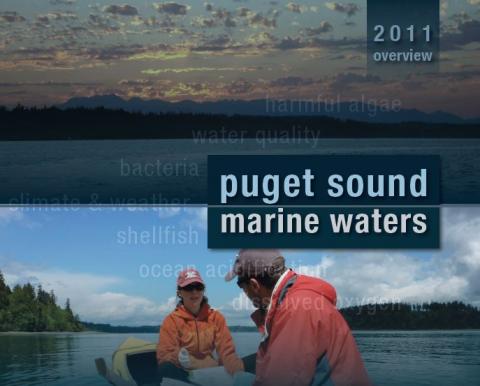
The Puget Sound Marine Waters 2011 report is now available. The report was produced by the Puget Sound Ecosystem Monitoring Program and assesses the condition and quality of the waters of Puget Sound. 

Audio recordings of rhinoceros auklets on Protection Island.

King County contains four major marine habitats: backshore, intertidal and shallow subtidal, deep subtidal, and riverine/sub-estuarine. Descriptions of each of these habitats and the types of flora and fauna associated with them are provided below.

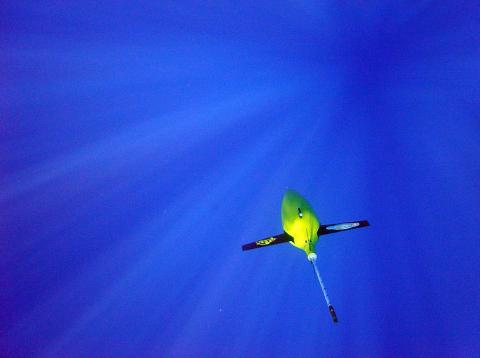
They are sometimes called Autonomous Underwater Vehicles (AUVs), or submersible drones. They glide like airships through the deeper channels of Puget Sound, and have become an important tool for a wide array of open ocean applications, including detection of marine mammals, military reconnaissance and the monitoring of environmental disasters like the Deepwater Horizon oil spill. Puget Sound is the birthplace and key testing area of the Seaglider.

Fecal bacteria are found in the feces of humans and other homeothermic animals. They are monitored in recreational waters because they are good indicators of harmful pathogens that are more difficult to measure. 

"Habitat" describes the physical and biological conditions that support a species or species assemblage and refers to conditions that exist at many scales. An oyster shell provides habitat for some algae and invertebrates, whereas cubic miles of sunlit water in Puget Sound comprise the habitat for many planktonic species.