Nearshore habitat

The nearshore habitat of Puget Sound is usually defined as the area from the bluffs that line the shore to the area where water becomes too deep for light to penetrate and allow plants to grow, measured relative to mean lower low water (MLLW). It includes marine habitat and estuarine habitat, but stops at the farthest reach of the tide into an estuary, or the point where saltwater no longer mixes with fresh. Within Puget Sound’s nearshore are many varied habitat types, including rocky and sandy beaches, mudflats, salt marshes, kelp and eelgrass beds, and lagoons.

Sources:

Puget Sound Nearshore Ecosystem Restoration Project: http://www.pugetsoundnearshore.org/technical_reports.html.

Overview

The Puget Sound Nearshore Ecosystem Restoration Project (PSNERP) works to assess the health of Puget Sound nearshore environments and provides strategies for their protection and restoration. 

PSNERP logo

Related Articles

Puget Sound is the second largest estuary in the contiguous United States. Today, we understand that estuaries — where freshwater and saltwater merge — are among the most productive places for life to exist.

A report from NOAA and the Puget Sound Ecosystem Monitoring Program provides an overview of 2014 marine water quality and conditions in Puget Sound from comprehensive monitoring and observing programs.

This report documents how Washingtonians have responded to the challenges of protecting and restoring salmon and steelhead to healthy status. It also serves as a tool to summarize achievements, track salmon recovery progress through common indicators, and identify data gaps that need to be filled.

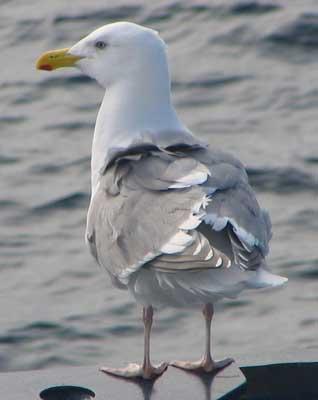
A 2015 article in the journal Environmental Science and Technology presents additional isotopic evidence that glaucus-winged gulls in the Salish Sea are shifting their diets from marine to terrestrial sources due to human impacts. Scientists hypothesize that declining forage fish may be the cause. 

Proceedings of the BC/Washington Symposium on the Marine Environment, January 13 and 14, 1994 

The symposium was held on September 12–14, 2012, at the University of Washington, Friday Harbor Laboratories campus. Sixty scientists, graduate students, and fisheries policy experts convened; showcasing ongoing research, conservation, and management efforts targeting forage fish from regional and national perspectives.