Nearshore habitat

The nearshore habitat of Puget Sound is usually defined as the area from the bluffs that line the shore to the area where water becomes too deep for light to penetrate and allow plants to grow, measured relative to mean lower low water (MLLW). It includes marine habitat and estuarine habitat, but stops at the farthest reach of the tide into an estuary, or the point where saltwater no longer mixes with fresh. Within Puget Sound’s nearshore are many varied habitat types, including rocky and sandy beaches, mudflats, salt marshes, kelp and eelgrass beds, and lagoons.

Sources:

Puget Sound Nearshore Ecosystem Restoration Project: http://www.pugetsoundnearshore.org/technical_reports.html.

Overview

The Puget Sound Nearshore Ecosystem Restoration Project (PSNERP) works to assess the health of Puget Sound nearshore environments and provides strategies for their protection and restoration. 

PSNERP logo

Related Articles

The 2011 Salish Sea Ecosystem Conference was held October 25 to 27 at the Sheraton Wall Centre in Vancouver, British Columbia. This event brought together a diverse group of government officials, community leaders, First Nations and tribal members, environmental managers, scientists and academics to learn from each other about the state and threats to the shared ecosystem. Over 950 delegates attended.

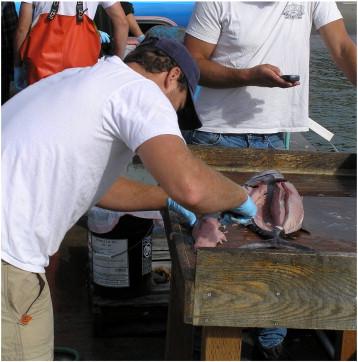
A 2015 paper in the journal Ecological Economics evaluated “personal use” and subsistence use of seafood among commercial operators in Washington and California, as well as the extent, range, and species diversity of noncommercial wild ocean seafood subsistence harvests. 

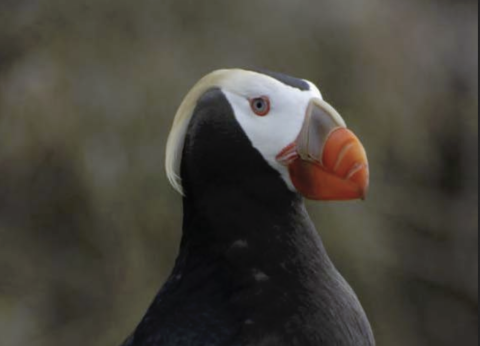
With its striking plumage and brilliant orange bill, the Tufted Puffin is an iconic seabird well known to native peoples, fishermen, and coastal communities throughout its range in the temperate and sub-arctic North Pacific. Though pelagic in winter, puffins gather on islands and headlands during spring and summer to breed and raise their young. They are members of the auk family, with stocky bodies adapted to “flying” underwater as they dive in pursuit of a wide range of fish and invertebrate prey. Nesting Tufted Puffins range up to 100 km from their breeding colonies to forage for their nestlings, and are famed for carrying 20 or more small fish at one time, neatly lined up and carried crosswise in their large, brightly colored bills.

A 2015 paper in the journal Limnology and Oceanography presents new data on ocean acidification in the Salish Sea.

Hypoxia, defined as dissolved oxygen (DO) concentrations less than 2 mg / L, has become widespread throughout estuaries and semi-enclosed seas throughout the world (Diaz 2001). 

A 2000 report from the Washington Department of Fish and  Wildlife provides information on haulout sites for harbor seals, Steller sea lions, California sea lions, and northern elephant seals located in Washington waters.