Nearshore habitat

The nearshore habitat of Puget Sound is usually defined as the area from the bluffs that line the shore to the area where water becomes too deep for light to penetrate and allow plants to grow, measured relative to mean lower low water (MLLW). It includes marine habitat and estuarine habitat, but stops at the farthest reach of the tide into an estuary, or the point where saltwater no longer mixes with fresh. Within Puget Sound’s nearshore are many varied habitat types, including rocky and sandy beaches, mudflats, salt marshes, kelp and eelgrass beds, and lagoons.

Sources:

Puget Sound Nearshore Ecosystem Restoration Project: http://www.pugetsoundnearshore.org/technical_reports.html.

Overview

The Puget Sound Nearshore Ecosystem Restoration Project (PSNERP) works to assess the health of Puget Sound nearshore environments and provides strategies for their protection and restoration. 

PSNERP logo

Related Articles

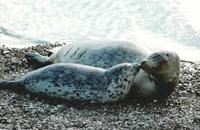
A master's thesis prepared at Western Washington University discusses the impact of harbor seals on fish stocks in the San Juan Islands, where the seals are a year-round predator.

Browse a collection of shellfish photos provided by the Swinomish Tribe.

With funding from the EPA (EPA Interagency Agreement DW-13-923276-01), scientists at the Northwest Fisheries Science Center and the University of Washington used a field and quantitative modeling ‘source-transport-fate’ assessment approach to classify the vulnerability of shellfish growing areas to closures caused by watershed and marine-derived pathogens. Based on the historical prevalence of nutrient pollution, shellfish closures, and phytoplankton blooms in commercial and recreational shellfish growing area, the project focused on three nearshore sites--the Hamma Hamma (WRIA 16), Dosewallips (WRIA 16) and Samish (WRIA 3).

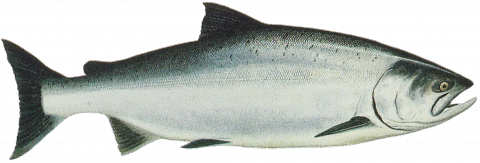
A new Chinook monitoring framework is designed to build cooperation among managers and policymakers working across the Puget Sound watershed. The report, prepared by an independent team of scientists and released by NOAA, includes a regionally specific, common classification system for Chinook habitats and key ecological attributes. 

The Puget Sound Recovery Implementation Technical Team has released a draft of a NOAA technical memorandum describing frameworks for adaptive management and monitoring of Chinook salmon in Puget Sound. Download the report.

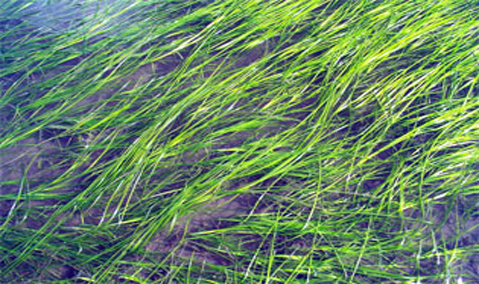
Eelgrass (Zostera marina L.) is an aquatic flowering plant common in tidelands and shallow waters along much of Puget Sound’s shoreline. It is widely recognized for its important ecological functions, and provides habitat for many Puget Sound species such as herring, crab, shrimp, shellfish, waterfowl, and salmonids.