Nearshore habitat

The nearshore habitat of Puget Sound is usually defined as the area from the bluffs that line the shore to the area where water becomes too deep for light to penetrate and allow plants to grow, measured relative to mean lower low water (MLLW). It includes marine habitat and estuarine habitat, but stops at the farthest reach of the tide into an estuary, or the point where saltwater no longer mixes with fresh. Within Puget Sound’s nearshore are many varied habitat types, including rocky and sandy beaches, mudflats, salt marshes, kelp and eelgrass beds, and lagoons.

Sources:

Puget Sound Nearshore Ecosystem Restoration Project: http://www.pugetsoundnearshore.org/technical_reports.html.

Overview

The Puget Sound Nearshore Ecosystem Restoration Project (PSNERP) works to assess the health of Puget Sound nearshore environments and provides strategies for their protection and restoration. 

PSNERP logo

Related Articles

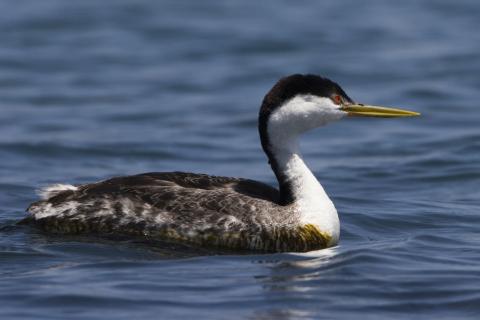
A June 19, 2013 paper in the journal PLoS ONE hypothesizes that regional declines in Western Grebe populations may be related to decreasing numbers of forage fish. Using citizen science data from 36 years of bird counts, researchers were able to look at population trends up and down the entire West Coast, finding that abundance of grebes decreased in the Salish Sea but increased in southern California. North American population declined by 52% overall.

Once a month, Washington State Department of Ecology marine scientists take to the air to obtain high-resolution aerial photo observations and gather water data at the agency's monitoring stations and via state ferry transects. This provides a visual picture of the health of Puget Sound, which they call Eyes Over Puget Sound or EOPS.

This paper uses water quality data to examine the relationship between environmental condition and recreational use of parks in Puget Sound.

Sediment health in Central Puget Sound has shown a recent steep decline, according to a report by the Washington Department of Ecology. The report compares monitoring data over a ten-year period between 1998/1999 and 2008/2009.

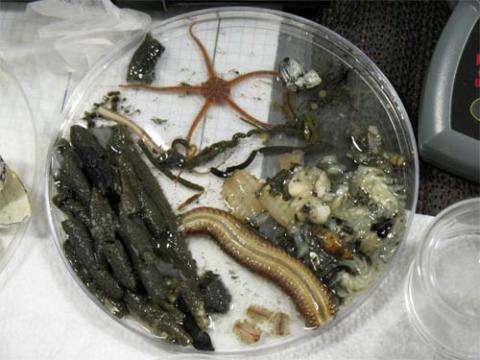
Researchers monitored populations of benthic invertebrates, sediment-dwelling organisms that depend on an environment free of pollutants, as part of the Puget Sound Ecosystem Monitoring Project (PSEMP). The report shows that adversely affected invertebrates were found across 28% of the region, compared with 7% ten years prior.

Sediment samples were also tested for 133 different potentially toxic chemicals. Samples revealed an overall increase in low-level toxicity

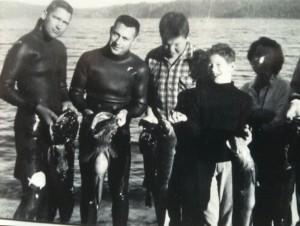
Vern Morgus remembers the early days of scuba diving in Puget Sound.

A master's thesis prepared at Western Washington University discusses the impact of harbor seals on fish stocks in the San Juan Islands, where the seals are a year-round predator.