Terrestrial habitat

Terrestrial habitat in Puget Sound varies greatly, from alpine and subalpine meadows and evergreen forests to valleys, floodplains, and prairie. However, these ecosystems are not clearly divided but blend smoothly into each other, linked by rivers and streams and the overlapping ranges of various species, determined by their tolerance of various environmental conditions. Various approaches exist for categorizing habitat types. Franklin and Dyrness developed a system in 1973 using dominant tree species as distinguishing features. In the Northwest, Sitka spruce dominates the lower elevations, moving towards Western hemlock and Douglas fir farther from sea level. Silver fir is more prevalent in the middle range, and mountain hemlock at higher elevations. Jones (1936) established the four Merriam’s Life Zones: Humid Transition, Canadian, Hudson, and Arctic-Alpine, which are defined by vegetation patterns, precipitation, and elevation.

Sources:

Kruckeberg, Arthur. A Natural History of Puget Sound Country.1991. University of Washington Press, Seattle, WA.

Overview

Freshwater habitat in the Puget Sound region consists of rivers, marshes, streams, lakes and ponds that do not have any saltwater input. Many species depend on these freshwater resources, including salmon, salamanders, frogs, and beavers.

Freshwater habitat in King County. Photo by Jeff Rice. All rights reserved.

Related Articles

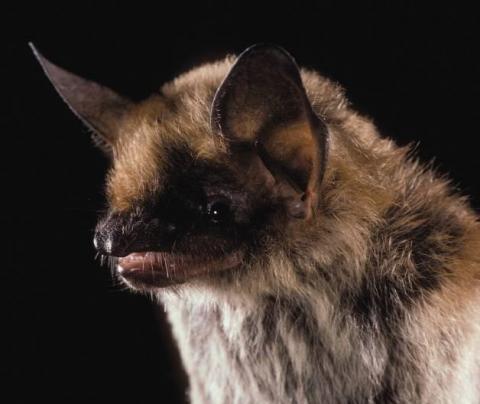
The Washington Department of Fish and Wildlife recently released a Bat Conservation Plan for the 15 species of bats found in Washington State. All but four of these species occur within the greater Puget Sound watershed1, including:

Big Brown Bat (Eptesicus fuscus), California Myotis (Myotis californicus), Fringed Myotis (Myotis thysanodes), Hoary Bat (Lasiurus cinereus), Keen’s Myotis (Myotis keenii), Little Brown Myotis (Myotis lucifugus), Long-legged Myotis (Myotis volans), Silver-haired Bat (Lasionycteris noctivagans), Townsend’s Big-eared Bat (Corynorhinus townsendii), Western Long-eared Myotis (

This article was originally published by the Washington Department of Fish and Wildlife as part of its annual report Threatened and Endangered Wildlife in Washington.

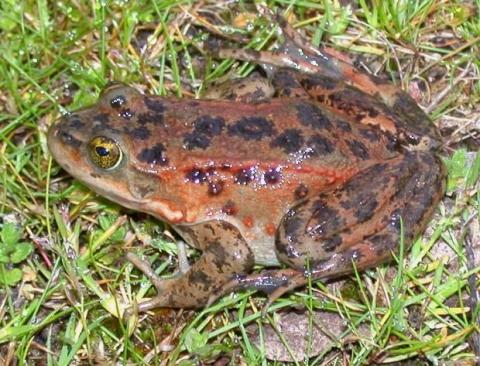
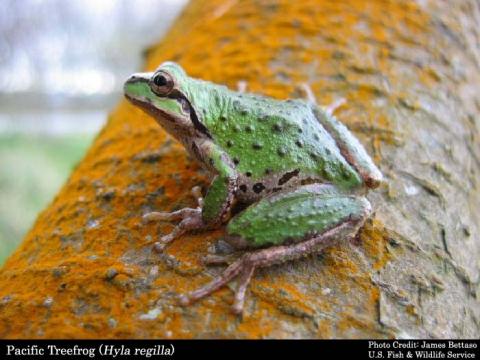
The Sauk-Suiattle Indian Tribe conducts annual surveys of amphibian egg masses in the Reservation Slough wetland near the Sauk River.

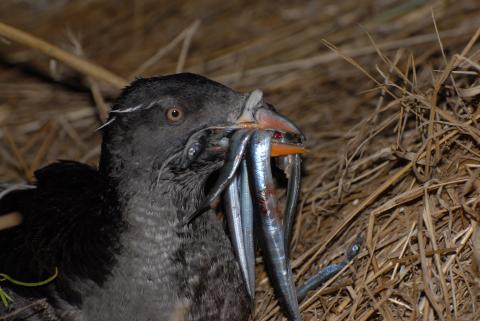
Audio recordings of rhinoceros auklets on Protection Island.

Wetlands are recognized as critical ecosystems for biodiversity because of their disproportional use by wildlife and exceptional habitats for plants. It is their unique combination of shallow aquatic habitats and adjacent terrestrial conditions extending over a wide range of geomorphic and elevational settings that accounts for their ecological complexity and resultant richness. Because of their landscape setting, each wetland tends to exhibit unique habitat types and characteristic arrays of species adapted to idiosyncratic conditions, products of each wetland’s ecological and evolutionary history.

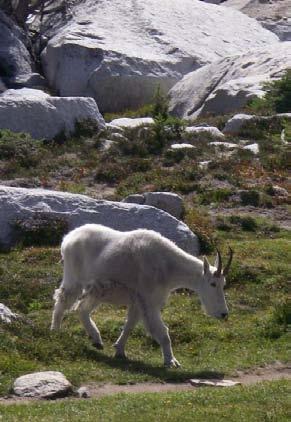
Except for a very small area in the SE corner of the County, the subalpine and alpine habitats are located in the North Cascades Ecoregion that occupies the NE quarter of King County. This ecoregion is composed of steeply dissected valleys that rise precipitously to the subalpine (montane) forests, meadows, and parklands and, in a short distance more, to the alpine ridges and peaks of the Cascade Crest. The habitats that typify this high-elevation zone are among the most undisturbed habitats remaining in King County.

For the purposes of this discussion, we separate the subalpine zone into three distinctive habitats