Terrestrial habitat

Terrestrial habitat in Puget Sound varies greatly, from alpine and subalpine meadows and evergreen forests to valleys, floodplains, and prairie. However, these ecosystems are not clearly divided but blend smoothly into each other, linked by rivers and streams and the overlapping ranges of various species, determined by their tolerance of various environmental conditions. Various approaches exist for categorizing habitat types. Franklin and Dyrness developed a system in 1973 using dominant tree species as distinguishing features. In the Northwest, Sitka spruce dominates the lower elevations, moving towards Western hemlock and Douglas fir farther from sea level. Silver fir is more prevalent in the middle range, and mountain hemlock at higher elevations. Jones (1936) established the four Merriam’s Life Zones: Humid Transition, Canadian, Hudson, and Arctic-Alpine, which are defined by vegetation patterns, precipitation, and elevation.

Sources:

Kruckeberg, Arthur. A Natural History of Puget Sound Country.1991. University of Washington Press, Seattle, WA.

Overview

Freshwater habitat in the Puget Sound region consists of rivers, marshes, streams, lakes and ponds that do not have any saltwater input. Many species depend on these freshwater resources, including salmon, salamanders, frogs, and beavers.

Freshwater habitat in King County. Photo by Jeff Rice. All rights reserved.

Related Articles

The July 2014 issue of the journal Coastal Management focuses on the role of social sciences in Puget Sound ecosystem recovery. Articles range from political ecology to the development of human wellbeing indicators and directly address current Puget Sound restoration efforts. Guest editors include Encyclopedia of Puget Sound topic editor Kelly Biedenweg and Puget Sound Science Panel co-chair Katharine Wellman. The journal is co-edited by Patrick Christie of our editorial board. Extended abstracts of the articles will be available on these pages in coming weeks.

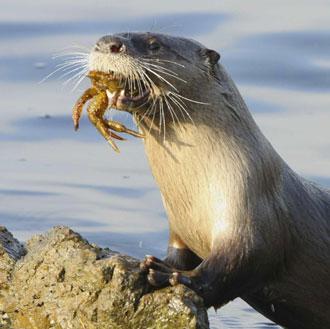
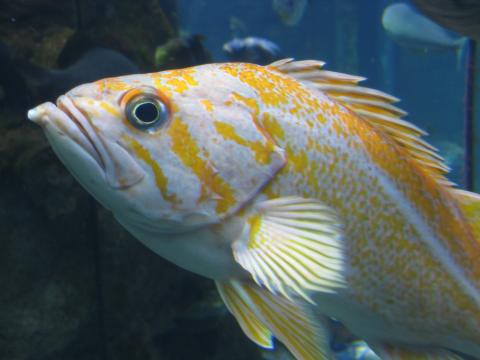
A 2014 paper in the journal Aquatic Mammals examines coastal river otter predation on rockfish at three islands in the Salish Sea.

Approximately every two years, the SeaDoc Society prepares a list of species of concern within the Salish Sea ecosystem. The following paper found 119 species at risk and was presented as part of the proceedings of the 2014 Salish Sea Ecosystem Conference, April 30 – May 2, 2014, Seattle, Washington. 

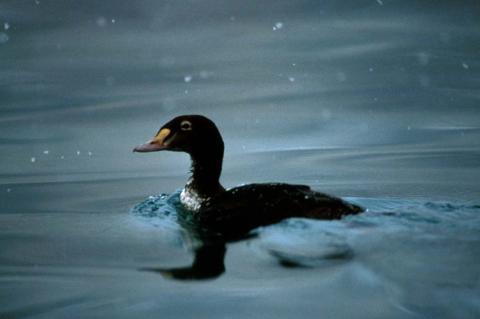
A December 2013 report identifies marine and terrestrial bird species for use as indicators within the Puget Sound Partnership's "Vital Signs" for ecosystem health. 

Scientists argue that environmental disasters are inevitable and that it is just a matter of when and where they will occur. "Our coasts and oceans routinely experience significant environmental crises," writes Dr. Usha Varanasi, who makes a case for staying ahead of the curve and "frontloading the science." Her 2013 paper in the Washington Journal of Environmental Law & Policy proposes a new model for ecological disaster planning and response, in which baseline ecosystem data and syntheses are collected in advance of possible incidents. 
 

A December 2013 report by the University of Washington Climate Impacts Group projects wide reaching change for the Puget Sound ecosystem and the Pacific Northwest. Lead author: Encyclopedia of Puget Sound climate change topic editor Amy Snover.