Terrestrial habitat

Terrestrial habitat in Puget Sound varies greatly, from alpine and subalpine meadows and evergreen forests to valleys, floodplains, and prairie. However, these ecosystems are not clearly divided but blend smoothly into each other, linked by rivers and streams and the overlapping ranges of various species, determined by their tolerance of various environmental conditions. Various approaches exist for categorizing habitat types. Franklin and Dyrness developed a system in 1973 using dominant tree species as distinguishing features. In the Northwest, Sitka spruce dominates the lower elevations, moving towards Western hemlock and Douglas fir farther from sea level. Silver fir is more prevalent in the middle range, and mountain hemlock at higher elevations. Jones (1936) established the four Merriam’s Life Zones: Humid Transition, Canadian, Hudson, and Arctic-Alpine, which are defined by vegetation patterns, precipitation, and elevation.

Sources:

Kruckeberg, Arthur. A Natural History of Puget Sound Country.1991. University of Washington Press, Seattle, WA.

Overview

Freshwater habitat in the Puget Sound region consists of rivers, marshes, streams, lakes and ponds that do not have any saltwater input. Many species depend on these freshwater resources, including salmon, salamanders, frogs, and beavers.

Freshwater habitat in King County. Photo by Jeff Rice. All rights reserved.

Related Articles

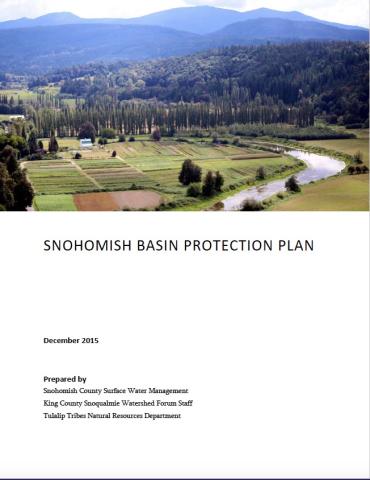
A 2015 report from Snohomish County, King County and the Tulalip Tribes outlines protection strategies for salmon and salmon habitat within the Snohomish Basin. 

The number of species of concern in the Salish Sea is growing at an average annual rate of 2.6%, according to a report published in the proceedings of the 2016 Salish Sea Ecosystem Conference in Vancouver, B.C.

The number of species of concern in the Salish Sea is growing at an average annual rate of 2.6%, according to a report published in the proceedings of the 2016 Salish Sea Ecosystem Conference in Vancouver, B.C.

Land cover conversion through human development was listed as a leading cause of ecosystem decline in the 2014 Puget Sound Pressures Assessment, a document supported by the Environmental Protection Agency and prepared by more than 60 of the region's scientists. 

Runoff from rain and melting snow is one of the leading causes of pollution in Puget Sound. Here are selected facts related to stormwater, its prevalence, how it affects the Puget Sound ecosystem, and its environmental and economic impacts.

A 2015 report from the Whatcom Conservation District and Whatcom County describes a pilot watershed characterization study focusing on the Terrell Creek and Birch Bay areas. The report and related appendices are available for download.