All Articles
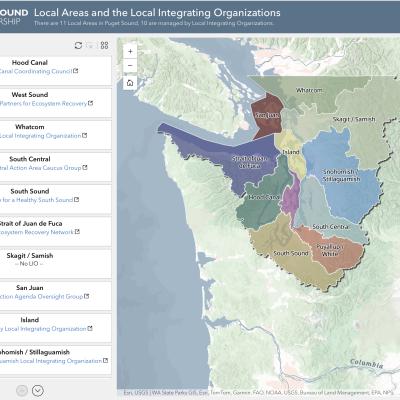
Local Integrating Organizations (LIOs)
Local Integrating Organizations (LIOs) are local forums that bring people together to protect and restore the ecosystem through locally specific strategies and actions. LIOs provide a venue for stakeholders and partners to identify and develop locally driven recovery strategies.
Puget Sound Science Update (2011)
The Puget Sound Science Update represents the state‐of‐the‐science supporting the work of the Puget Sound Partnership to restore and protect the Puget Sound ecosystem. The content of the Puget Sound Science Update was developed following a process modeled after the rigorous peer‐review process used by the Intergovernmental Panel on Climate Change (IPCC), in which small author groups produced draft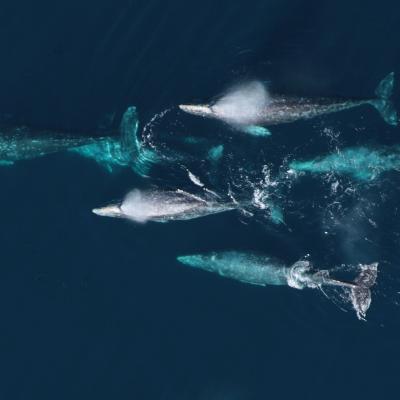
Gray whale safe haven in Puget Sound takes on new significance amid population decline
Almost 200 gray whales have washed up dead along the West Coast in 2026. A small group of gray whales who feed in Puget Sound is surprisingly central to understanding the crisis.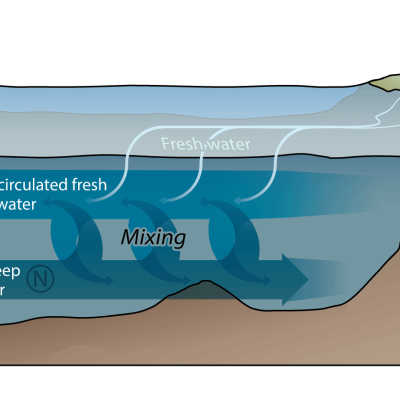
Marine circulation in Puget Sound
Water circulation in Puget Sound is important for flushing out nutrients and affects dissolved oxygen. This overview describes Puget Sound's two-layer circulation process where fresher surface water flows out to sea while saltier ocean water flows in along the bottom. Dissolved oxygen in Puget Sound basins varies by location and season, and is influenced by ocean water entering at the Strait of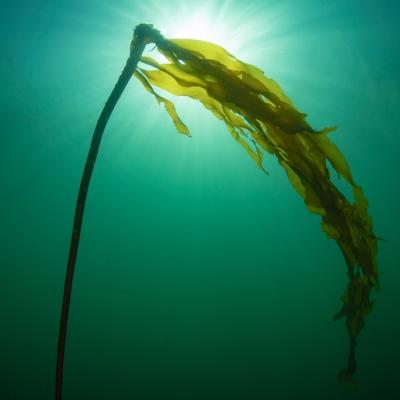
Nitrogen and carbon cycling in the marine system
This overview describes how nitrogen in the marine environment changes depending on oxygen levels and can be lost from the system as nitrogen gas. In spring and summer, nitrogen near the surface of the Salish Sea may become low enough to limit primary production, and organic carbon that settles into sediments can reduce dissolved oxygen.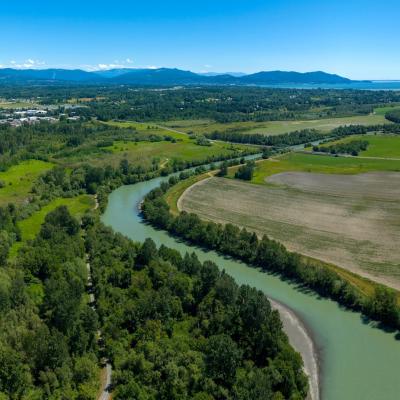
Controlling nutrients in the watershed
A state plan calls for reductions in nutrients across 163 distinct watersheds in Puget Sound, including non-point-source pollution. Agencies and restoration practitioners are looking at ways to measure the problem and hope to work with a broad slew of landowners and other partners to help control it. This article is part of an occasional series on nutrient pollution in Puget Sound.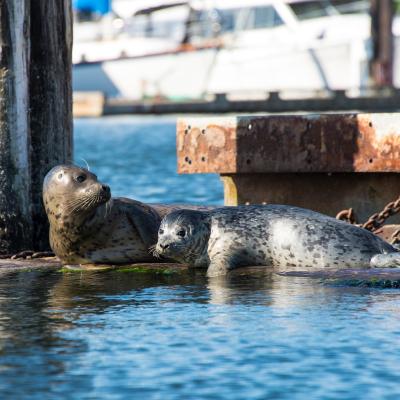
Congress debates lethal removal of seals and sea lions in Puget Sound
A proposed amendment to the Marine Mammal Protection Act has renewed a debate over the merits of killing seals and sea lions to protect salmon. Proponents say it will help some endangered salmon populations while opponents say the legislation is misguided and likely to be counterproductive.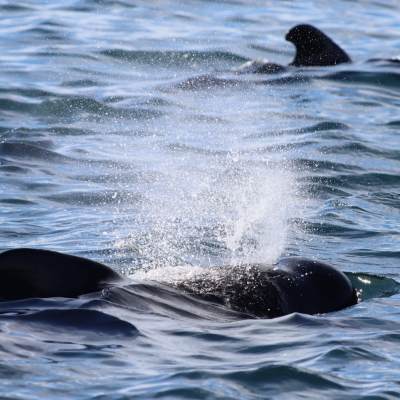
Short-finned pilot whales in the Salish Sea
Short-finned pilot whales occur around the world as distinct populations, but records of their occurrence in the Salish Sea are rare. Pilot whales are highly social, with some of the strongest bonds known among cetaceans. Unfortunately this makes them vulnerable to mass strandings and hunting.
Puget Sound Marine Waters 2025 Overview
The 15th annual Puget Sound Marine Waters Overview combines summaries of monitoring data for marine conditions occurring in 2025. It represents the collective work of federal, tribal, state, and local agencies, academia, nonprofits, and private and volunteer groups.