

All Articles
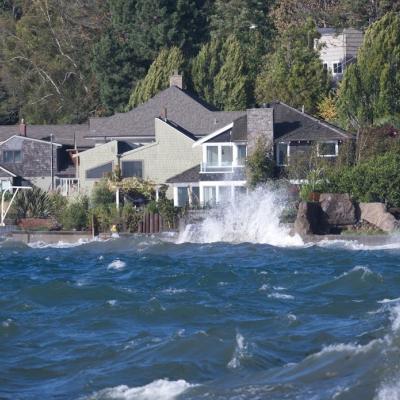
Residential shoreline loan program feasibility study: Developing a new Shore Friendly incentive to help Puget Sound homeowners finance beach restoration and sea level rise adaptation
The 2018 Shoreline Armoring Implementation Strategy identified development of new financial incentives as a near-term priority. This study, funded by the Habitat Strategic Initiative, assesses the feasibility of developing a Shore Friendly residential shoreline loan program.
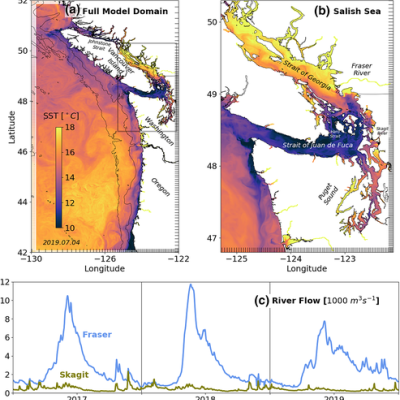
Estuarine circulation, mixing, and residence times in the Salish Sea
A 2021 article in the journal JGR Oceans describes circulation and mixing in the Salish Sea. The findings are based on simulations produced by the LiveOcean computer model.
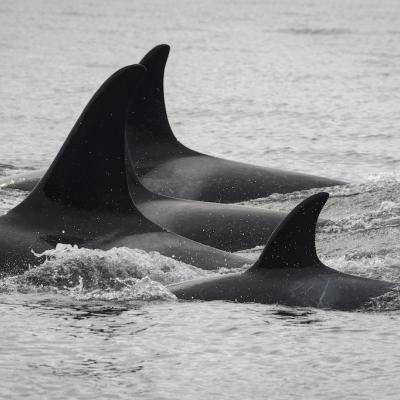
Killer whale CSI
Collisions with boats and other interactions with humans are "significant" causes of death for killer whales in the northeastern Pacific, a recent study says. The findings come from one of the most comprehensive looks at killer whale pathology to date, but scientists say determining how a killer whale may have died is often notoriously difficult.
Benthic Index of Biotic Integrity (B-IBI) Implementation Strategy
The Benthic Index of Biotic Integrity (B-IBI) Implementation Strategy is designed to improve freshwater quality by analyzing the health and diversity of invertebrate populations in Puget Sound area streams.
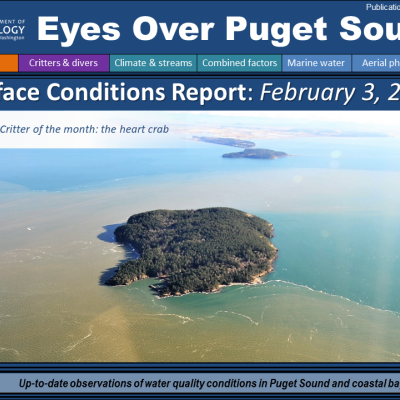
Eyes Over Puget Sound: Surface Conditions Report - February 3, 2021
Rivers are flowing higher than normal since 2020. Winter weather has been warmer and wetter. In marine waters, temperatures have become too cool for Northern Pacific anchovies to tolerate in North Sound. From patches of jellyfish and snow geese, to sediment and early blooms, there is more happening in the winter than you might expect. Puget Sound has many species worth showcasing such as the heart
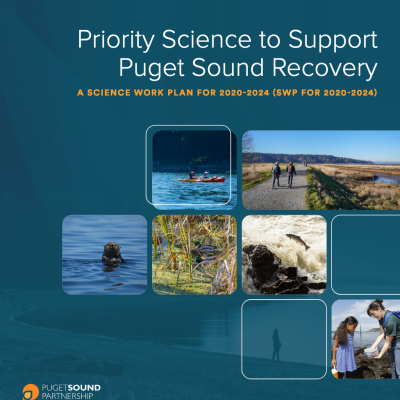
Priority science to support Puget Sound recovery: A Science work plan for 2020-2024
Priority Science to Support Recovery of the Puget Sound Ecosystem: A Science Work Plan for 2020-2024 (SWP for 2020-2024) describes the information, learning, and interaction needed to support the coordinated efforts to recover, protect, and improve the resilience of the Puget Sound ecosystem.

Sensing liminal landscapes in Puget Sound
Puget Sound's shorelines are "liminal landscapes" that can inspire senses of "escape, transformation, and human creativity," according to a 2021 paper in GeoJournal. That may have regional policy implications as coastal researchers increasingly recognize the need to incorporate community inclusion and 'sense of place' in management decisions. The paper includes findings from a 12-county survey
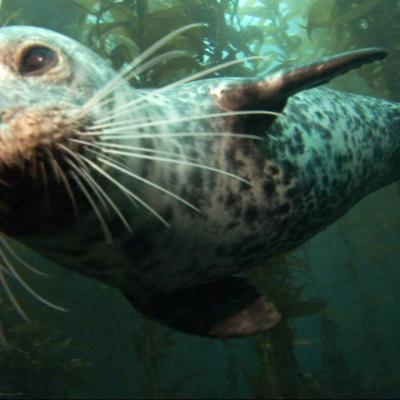
Antibiotic resistance of bacteria in two marine mammal species, harbor seals and harbor porpoises, living in an urban marine ecosystem, the Salish Sea, Washington State, USA
Harbor seals and harbor porpoises in the Salish Sea are showing a relatively high presence of antibiotic-resistant bacteria. A 2021 paper in the journal Oceans suggests that these findings may indicate a wider problem among other species in the region.
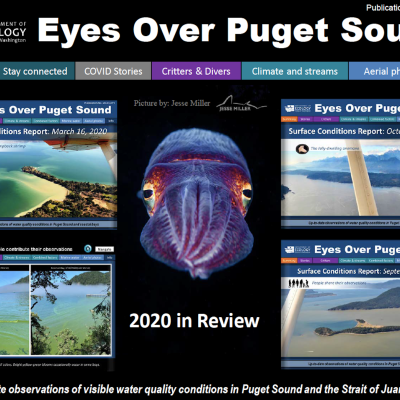
Eyes Over Puget Sound - 2020 Year in Review
The Washington State Department of Ecology has prepared a summary review of its Eyes Over Puget Sound surface condition reports from 2020.

Puget Sound National Estuary Program: Tribal implementation final report
This report details the outcomes, successes, and reflections of the final two years (2014-15) of an Environmental Protection Agency (EPA) National Estuary Program award dedicated to tribal restoration and protection projects in the Puget Sound watershed.