

All Articles

A health check for seabirds
Scientists are still trying to understand what caused the deaths of thousands of rhinoceros auklets in the Salish Sea in 2016. Some studies point to disease as a central factor in that incident and potentially other large seabird die-offs along the coast. That is prompting a deeper look at what makes these birds sick, and how local populations are faring. We followed a group of researchers as they

Genetic composition and conservation status of coastal cutthroat trout in the San Juan Islands, Washington
The watersheds of Washington’s San Juan Islands were thought to be too small to support wild salmonid populations, and many streams flow only seasonally. But a 2019 article in the journal Conservation Genetics reports that at least five watersheds in the region support populations of coastal cutthroat trout (Oncorhynchus clarki clarki). Genetic analysis of the cutthroat trout in three of the
2019 State of the Sound Report
The 2019 State of the Sound is the Puget Sound Partnership’s sixth biennial report to the Legislature on progress toward the recovery of Puget Sound by 2020. The document reports on both the status of the Partnership's recovery efforts and the status of a suite of ecosystem indicators.
Eyes Over Puget Sound: Surface Conditions Report - October 30, 2019
After a dry early summer followed by more than expected rain, rivers mostly remained lower than in 2018. In October air temperatures dropped, but water temperatures remained warm enough for spawning anchovies in South and Central Sound and herring and salmon optimal growth in Whidbey Basin. By the end of October many red-brown blooms vanished, yet the waters of South Sound are still green, adorned

Kelp crisis? Decline of underwater forests raises alarms
They rival tropical forests in their richness and diversity, but Puget Sound's kelp beds have declined steeply in recent decades. Scientists are just starting to understand the extent of these losses. What they are finding is bringing kelp to the forefront of Puget Sound's environmental concerns.
2018 Puget Sound Marine Waters Overview
A new report from the Puget Sound Ecosystem Monitoring Program says climate change altered the base of Puget Sound's food web in 2018, diminishing microscopic phytoplankton necessary for marine life. Scientists also observed lower abundances of fish, seabirds, and marine mammals.
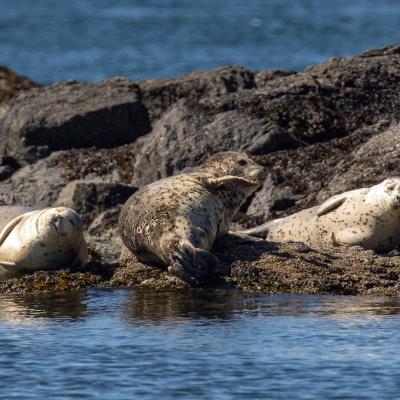
The occurrence of heavy metals in harbor seals of the San Juan Islands
A 2019 article in the Journal of Wildlife Diseases looked at trace element concentrations of heavy metals in the livers of harbor seals that died and stranded in the San Juan Islands. The study indicated exposure to trace elements (naturally occurring, human-introduced, or both) in the Salish Sea; however, the study reports that trace element toxicity is not a major threat to harbor seal health.
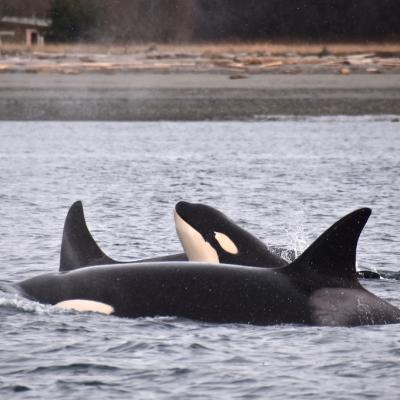
Status and trends for West Coast transient (Bigg’s) killer whales in the Salish Sea
Officially known as West Coast transients but increasingly referred to as Bigg’s killer whales, these marine mammal-eating orcas (Orcinus orca) are spending increasing time in the Salish Sea to consume their marine mammal prey including harbor seals, Steller sea lions, and harbor and Dall’s porpoise. They range from Southeast Alaska to California, but over the last 15 years more members of the

Enhancing the resilience of Puget Sound recovery: A path through the maze of resilience thinking
A 2019 report from the University of Washington Puget Sound Institute examines the application of 'resilience thinking' to Puget Sound protection and restoration.
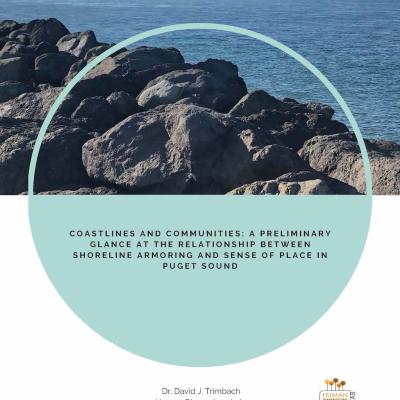
Coastlines and communities: A preliminary glance at the relationship between shoreline armoring and sense of place in Puget Sound
A 2019 report from Oregon State University examines how community members, including non-property owners, value shorelines in Puget Sound. The report emphasizes the impacts of shoreline armoring on survey respondents' sense of place in the region.