

All Articles
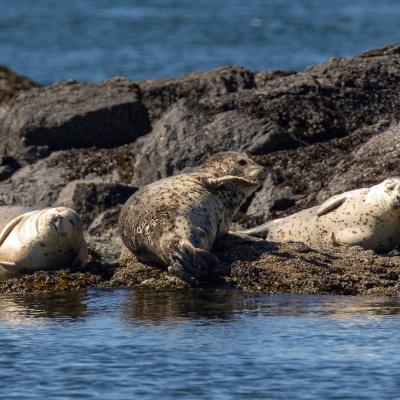
Causes of mortality in a harbor seal (Phoca vitulina) population at equilibrium
A 2020 article in the journal Frontiers in Marine Science looks at harbor seal stranding and necropsy findings in the San Juan Islands to assess age-related stranding trends and causes of mortality. The harbor seal (Phoca vitulina richardii) population in the Salish Sea has been at equilibrium since the mid-1990s. This stable population of marine mammals resides relatively close to shore near a
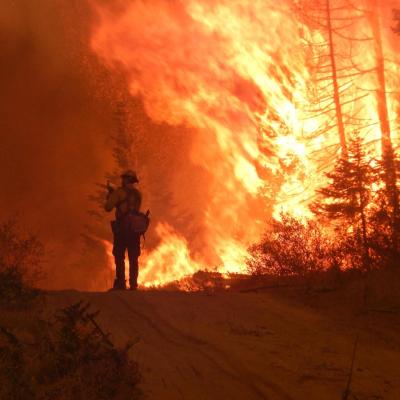
Fire danger returning to Western Washington
Historically, the eastern part of the state has seen the largest impacts from fires, but climate change is now increasing the risk west of the Cascades. That could have big implications for many rural communities throughout Western Washington, including those in the Puget Sound region.
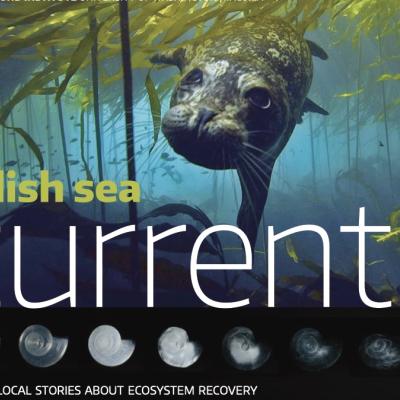
Salish Sea Currents special climate issue
Welcome to the 2020 edition of Salish Sea Currents magazine. This is the fourth issue of the magazine, and the first one dedicated to a single theme. All of the stories in this report address the impact of climate change on the Salish Sea ecosystem.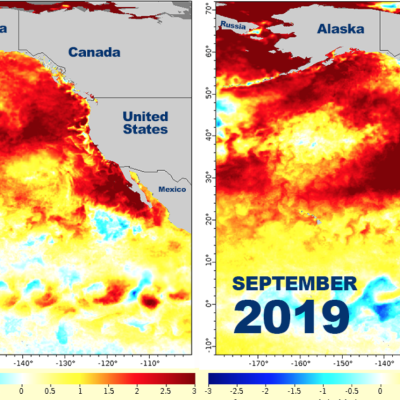
Warm-water ‘blobs’ significantly diminish salmon, other fish populations, study says
It’s no secret that salmon and other Northwest fish populations are expected to shrink as a result of a warming Pacific Ocean. But a new study suggests that the resulting decline in commercial fishing by 2050 could be twice as great as previously estimated by climate scientists.
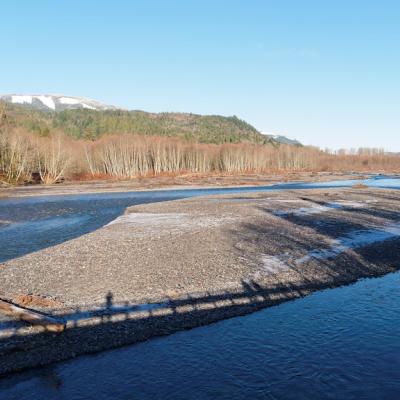
Nooksack River Transboundary Technical Collaboration Group 2018-2019 annual report
The Nooksack River watershed spans part of the border between British Columbia and the State of Washington. In August 2018, the international, multi-agency Nooksack River Transboundary Technical Collaboration Group was established to implement a three-year work plan to reduce fecal bacteria concentrations in the Nooksack River watershed. As a work plan deliverable, the group produced this annual
Voices Unbound: Enviro-Amplify
What do people really mean when they talk about the environment? A new podcast asks regular citizens a simple, but charged question: "What are the environmental challenges that are most important to you?" The answers to that question drive this engaging podcast in sometimes unexpected directions, from the environmental impacts of being homeless, to air quality, to wide-ranging discussions about
Earth Day events go online because of virus
Participants in this year’s Earth Day activities won’t be rallying in large groups, participating in environmental festivals or coming together to clean up the Earth. On the 50th anniversary of Earth Day — April 21st — the environmental movement will be uniquely digital, with many people celebrating from their home computers. [This story is reprinted from the Puget Sound Institute-sponsored blog
Pathogens Prevention Reduction and Control 5-6 (PC-00J88801) Final Report
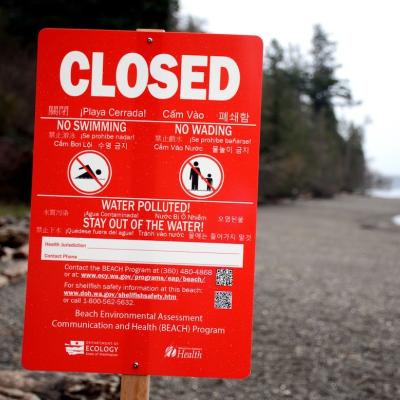
The Pathogens Prevention Reduction and Control agreement between the Environmental Protection Agency and the Washington State Department of Health focuses on the prevention and reduction of pathogen pollution in Puget Sound through the management of human and animal waste. The primary objectives of the agreement include restoring shellfish growing areas, avoiding shellfish closures, and protecting
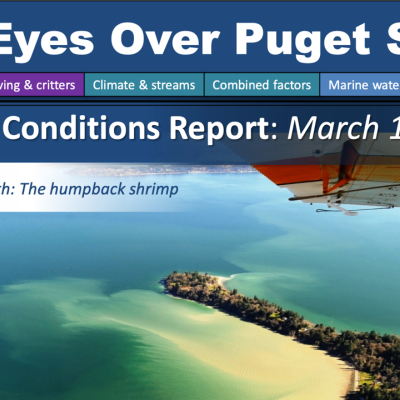
Eyes Over Puget Sound: Surface Conditions Report - March 16, 2020
After a wet January, precipitation has been low and air temperatures have been cooler. As a result, rivers gages are lower than expected, a pattern that has continued since last year. In March we approached the coldest water temperatures of the year. Herring are spawning in Port Madison. Although these cool temperatures are good for herring, temperatures are close to the survival limits for
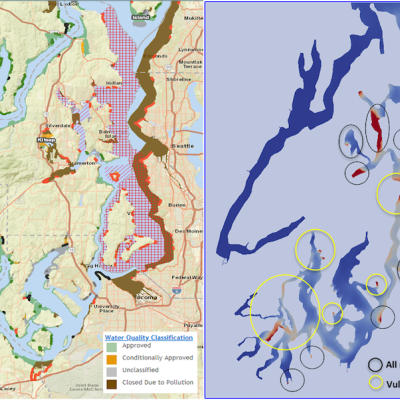
Ecosystem models expand our understanding of the Salish Sea
Scientists are using computer models to address complex issues in the Salish Sea like the rise of harmful algal blooms and the movement of toxic PCBs. LiveOcean, Atlantis and the Salish Sea Model are three systems that are changing the game for ecologists and other researchers.