

All Articles
Salish Sea tribes in Canada
This page includes links to information for First Nations living along the Salish Sea in Canada. First Nations peoples occupied what is now Canada prior to the arrival of Europeans and Americans, and over 50 cultural groups and unique languages are represented across the country.
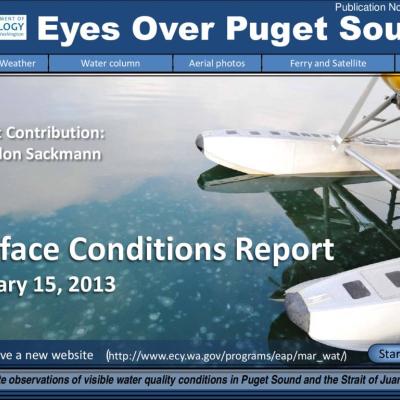
Eyes Over Puget Sound: Surface Conditions Report - January 15, 2013
The pattern of colder and fresher Puget Sound water persists. Jellyfish aggregations continue to persist in Budd Inlet. Debris lines are numerous and long. There are multiple oil sheens in Seattle waterways. CDOM (colored dissolved organic matter) sensor and en route ferry thermosalinograph provide an important tracer for freshwater entering Puget Sound from Whidbey Basin.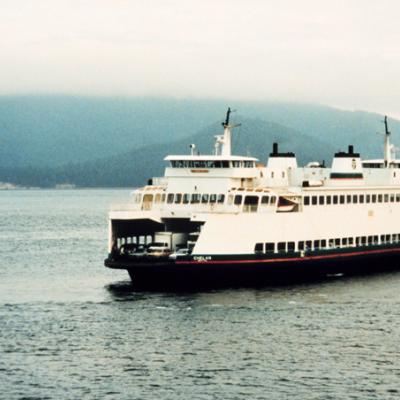
Carsey Institute studies on communities and coastal restoration in Puget Sound
In an effort to understand how residents of Puget Sound view social and environmental change in their region, researchers at the Carsey Institute at the University of New Hampshire and the National Oceanic and Atmospheric Administration collaborated on a public perceptions survey, visualization models, and stakeholder workshops in 2012. The results of their research are available online, and in

Eyes Over Puget Sound: Surface Conditions Report - December 13, 2012
The weather has been warm, cloudy with weak winds from the south. Surface water temperatures range from 8.5-9.5°C. River flows are dropping below expected levels, yet the seasonal increase in freshwater can be clearly seen. Debris lines are numerous near river estuaries. Algal biomass is down but jellyfish aggregations continue to go strong in terminal inlets.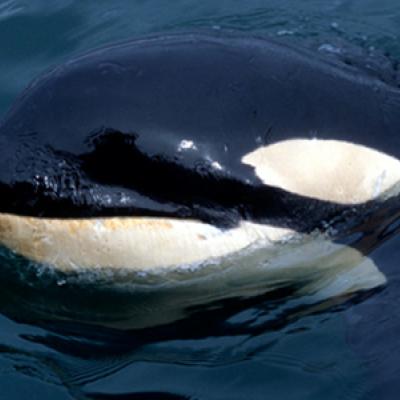
Report: The effects of salmon fisheries on Southern Resident Killer Whales
A recent report by an independent science panel reviewed data on the effects of salmon fisheries on Southern Resident Killer Whale populations. The report was released on November 30, 2012 and was commissioned by NOAA Fisheries and Oceans Canada.
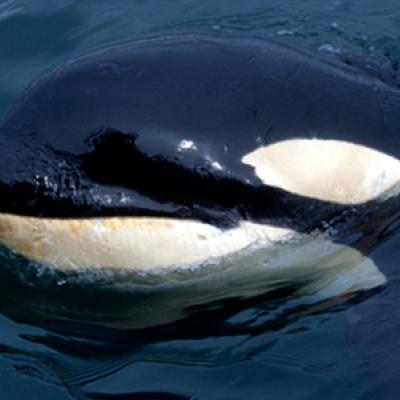
Killer whales in Puget Sound
Three distinct groups of killer whales (Orcinus orca) occupy the coastal waters of the northeastern Pacific. These groups—northern and southern residents, transients, and offshores—are distinguished by diet, behavior, morphology, and other characteristics. Among these, southern resident and transient killer whales commonly are found in Puget Sound. Northern residents and offshore killer whales
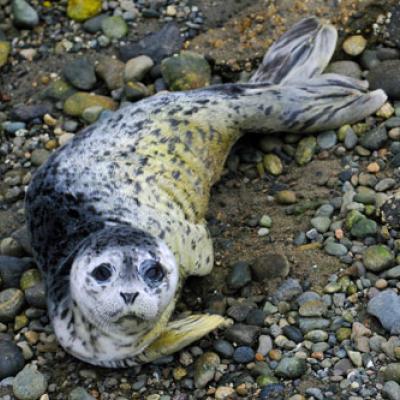
Harbor seals
Harbor seal numbers were severely reduced in Puget Sound during the first half of the twentieth century by a state-financed population control program. This bounty program ceased in 1960, and in 1972, harbor seals became protected under the federal Marine Mammal Protection Act and by Washington State.
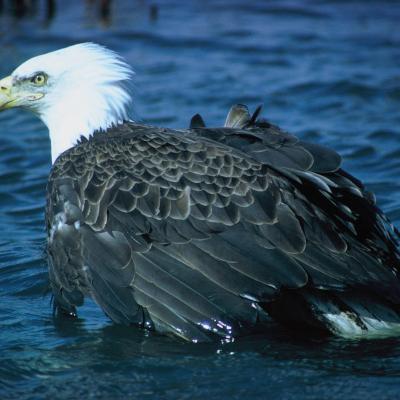
Bald eagles
The Puget Sound region has the highest densities of bald eagles in Washington. Breeding pairs initiate nesting activities in January or February.
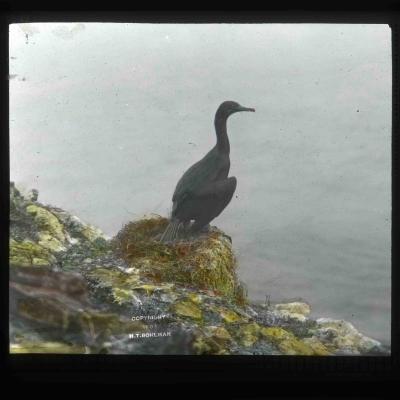
Marine birds
More than 70 bird species regularly utilize Puget Sound during some or all stages of their life histories, but only a portion of these are actively being investigated.
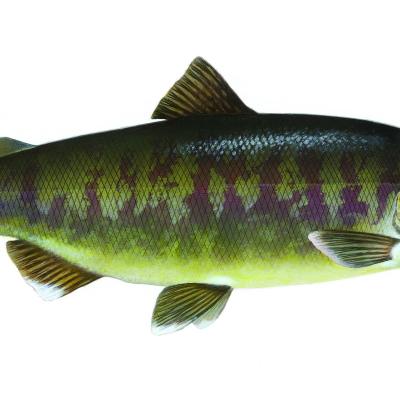
Salmonids in Puget Sound
Fish in the family Salmonidae (salmon, trout, and charr) play potentially integral roles in the upland freshwater, nearshore and pelagic marine ecosystems and food webs of Puget Sound.