Nearshore habitat

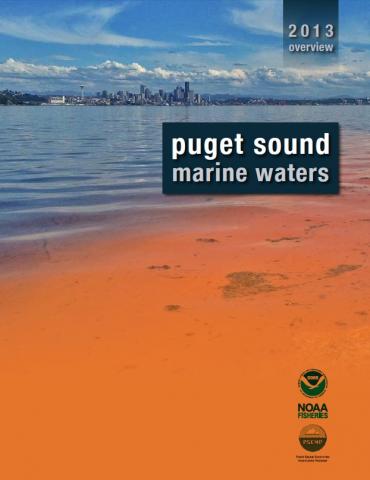
The nearshore habitat of Puget Sound is usually defined as the area from the bluffs that line the shore to the area where water becomes too deep for light to penetrate and allow plants to grow, measured relative to mean lower low water (MLLW). It includes marine habitat and estuarine habitat, but stops at the farthest reach of the tide into an estuary, or the point where saltwater no longer mixes with fresh. Within Puget Sound’s nearshore are many varied habitat types, including rocky and sandy beaches, mudflats, salt marshes, kelp and eelgrass beds, and lagoons.

Sources:

Puget Sound Nearshore Ecosystem Restoration Project: http://www.pugetsoundnearshore.org/technical_reports.html.

Overview

The Puget Sound Nearshore Ecosystem Restoration Project (PSNERP) works to assess the health of Puget Sound nearshore environments and provides strategies for their protection and restoration. 

PSNERP logo

Related Articles

A summary of environmental conditions in Pacific Canadian Waters and the broader North East Pacific in 2013.

A report from the Puget Sound Ecosystem Monitoring Program provides an overview of 2013 marine water quality and conditions in Puget Sound from comprehensive monitoring and observing programs.

The growth and survival of young salmon in streams, river deltas and floodplains are seen as crucial pieces of the salmon recovery puzzle. In part two of this two-part series, researchers at the Salish Sea Ecosystem Conference in Seattle say the complexities of the salmon life cycle require new coordination among scientists.

Scientists say Puget Sound’s salmon are dying young and point to low growth rates in the marine environment as a possible cause. In part one of this two-part series, scientists consider threats facing young salmon in the open waters of Puget Sound.

Scientists say eelgrass, an unassuming flowering plant found just off shore in Puget Sound, is vital to the health of the ecosystem. They also say the plant is declining. New and increasingly urgent efforts to restore it brought a group of researchers to the 2014 Salish Sea Ecosystem Conference.

A 2014 article in the journal Northwestern Naturalist shows how Harbor Seal tissues can reflect regional and temporal trends in contaminants in Puget Sound.