Nearshore habitat

The nearshore habitat of Puget Sound is usually defined as the area from the bluffs that line the shore to the area where water becomes too deep for light to penetrate and allow plants to grow, measured relative to mean lower low water (MLLW). It includes marine habitat and estuarine habitat, but stops at the farthest reach of the tide into an estuary, or the point where saltwater no longer mixes with fresh. Within Puget Sound’s nearshore are many varied habitat types, including rocky and sandy beaches, mudflats, salt marshes, kelp and eelgrass beds, and lagoons.

Sources:

Puget Sound Nearshore Ecosystem Restoration Project: http://www.pugetsoundnearshore.org/technical_reports.html.

Overview

The Puget Sound Nearshore Ecosystem Restoration Project (PSNERP) works to assess the health of Puget Sound nearshore environments and provides strategies for their protection and restoration. 

PSNERP logo

Related Articles

Marine Protected Areas (MPAs) have been present in Puget Sound since the early 1900s, although most were established after the 1960s. By 1998 there were at least 102 intertidal and subtidal protected areas in Puget Sound, created and managed by at least 12 different agencies or organizations at the local, county, State and Federal level.

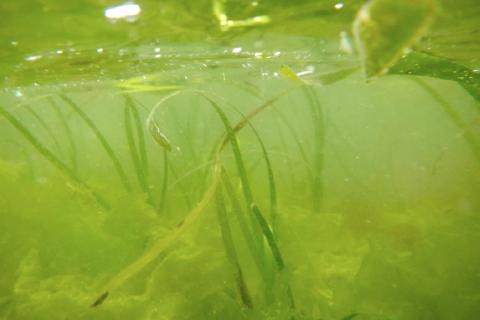
Although overall eelgrass abundance appears to be stable in Puget Sound, some local areas are showing declines. A 2014 report from the Washington State Department of Natural Resources looks at the potential impact of increased nitrogen on eelgrass health.   

The Puget Sound Model was designed and built by the University of Washington School of Oceanography in the early 1950s to simulate the tides and currents of Puget Sound. A series of videos produced by the Encyclopedia of Puget Sound describes its construction and operation.

Thousands of different compounds are produced and used as part of our daily lives.  Examples include pharmaceuticals (NSAIDs, birth control pills, etc), personal care products (sun screen agents, scents, preservatives, etc), food additives (artificial sweeteners) and compounds used in industrial and commercial applications (flame retardants, antibiotics, etc).  Advances in analytical methods have allowed the detection of many of these compounds in the environment.

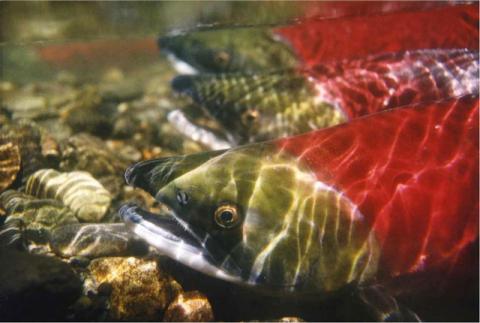
A 2014 report describes a study of socio-cultural values associated with blueback salmon in the Quinault Indian Nation. The blueback salmon (Oncorhynchus nerka) is a unique strain of sockeye that returns primarily to the Quinault river system.

Harbor porpoise (Phocoena phocoena) are one of the most frequently sighted cetaceans in the Salish Sea. Anecdotal information, possibly supported with stranding encounter rate data, suggests that harbor porpoise may have increased in Puget Sound, or have shifted their distribution back to Puget Sound relative to earlier decades.