

All Articles
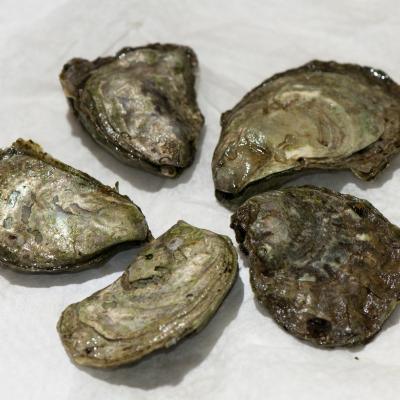
Gifts from the sea: shellfish as an ecosystem service
The region's famed mollusks provide more than just money and jobs. They offer what are called ecosystem services—a wide variety of benefits that humans derive from an ecosystem.
Native shellfish in nearshore ecosystems of Puget Sound
This 2006 technical report for the Puget Sound Nearshore Partnership describes how shellfish have high ecological, economical, cultural, recreational value, however human activity is threatening their existence by altering their native habitat with changes in land use, shoreline modifications, stormwater, sewage and industrial discharge.
Health of the Salish Sea as measured using transboundary ecosystem indicators
A December 2014 paper in the journal Aquatic Ecosystem Health & Management describes a project to identify transboundary ecosystem indicators for the Salish Sea.
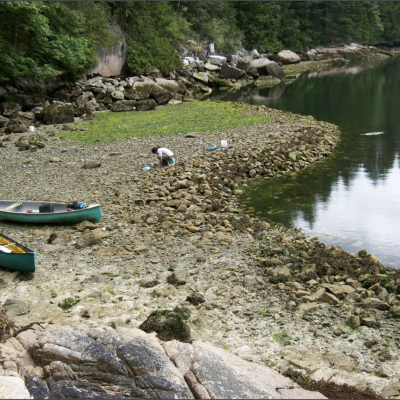
Ancient clam gardens of the Northwest Coast of North America
Northwest Coast First Peoples made clam garden terraces to expand ideal clam habitat at tidal heights that provided optimal conditions for clam growth and survival, therefore enhancing food production and increasing food security.
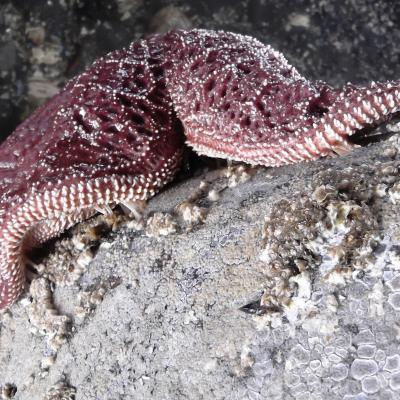
Virus associated with sea-star wasting disease
A virus is the likely cause of sea-star die-offs on the Northeast Pacific Coast and in Puget Sound, according to a November 2014 paper published in the Proceedings of the National Academy of Sciences.
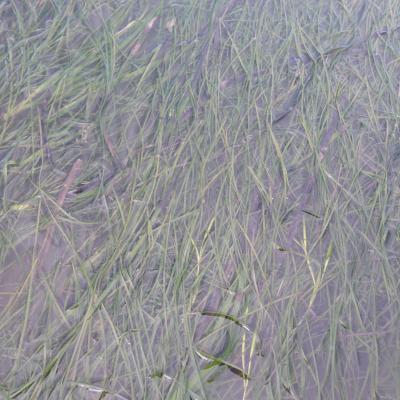
Ecological effect of a nonnative seagrass spreading in the Northeast Pacific: A review of Zostera japonica
A 2014 literature review in the journal Ocean & Coastal Management suggests negative effects of nonnative eelgrass on the native species.
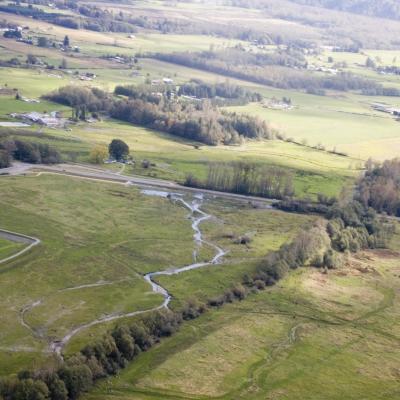
Nature inspires new approach to flood control
Scientists are rethinking floodplain management in Puget Sound. Can we have our farms and salmon too?
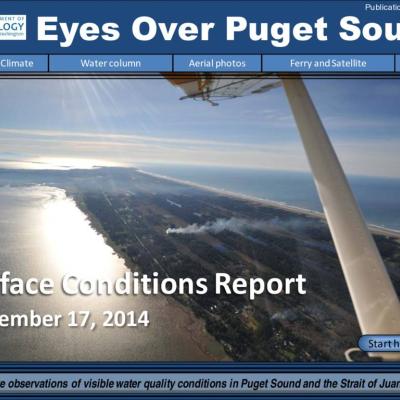
Eyes Over Puget Sound: Surface Conditions Report - November 17, 2014
A recent cold spell hits Puget Sound lowlands, interrupting this year’s warmer air temperatures. The warm ocean coincides with new maximum water temperatures observed throughout Puget Sound in October! Hood Canal’s higher dissolved oxygen and cold water anomalies are disappearing. November brings cold water from Whidbey Basin into Puget Sound with moderate levels of chlorophyll fluorescence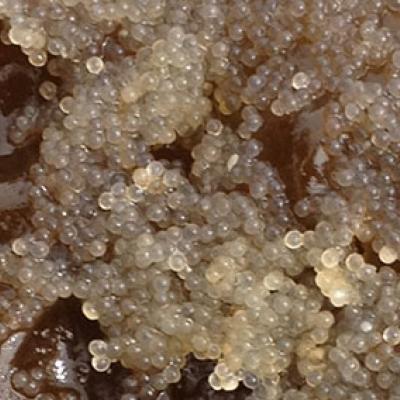
Habitat limitation and spatial variation in Pacific herring egg survival
Puget Sound herring reproduction is not limited by the amount of suitable spawning vegetation, according to a November 2014 paper in the journal Marine Ecology. The article points to terrestrial or marine variables as likely determinants of egg loss.

Developing human wellbeing indicators related to the natural environment for Whatcom County
An October 2014 report examines the planning and monitoring of human wellbeing as a component of resource management in Whatcom County.