

All Articles
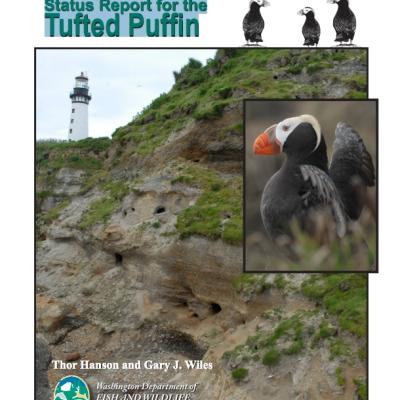
State of Washington status report for the tufted puffin
A 2015 report from the Washington Department of Fish and Wildlife reviews information relevant to the status of the tufted puffin in Washington and addresses factors affecting this status.
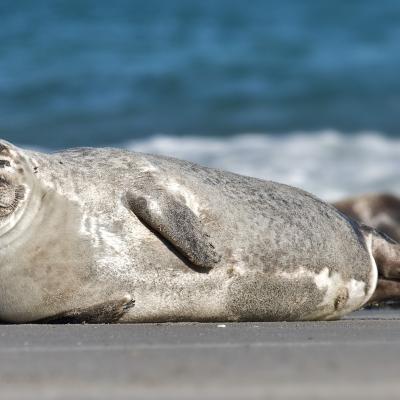
Foraging differences between male and female harbor seals present challenges for fisheries management
A 2015 article published in the Marine Ecology Progress Series identifies intraspecific differences in diet between harbor seals in the Salish Sea, suggesting implications for marine reserve management.
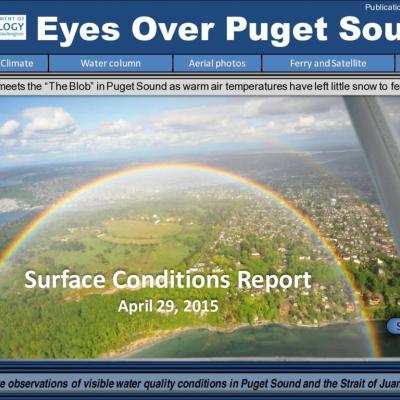
Eyes Over Puget Sound: Surface Conditions Report - April 29, 2015
Warm waters from “The Blob” in Puget Sound combine with drought conditions as warm air has left little snow to feed the rivers. Water temperatures throughout Puget Sound are the highest in 25 years and oxygen is exhibiting record lows. High suspended sediment in the north is still coming in from the Fraser River. Otherwise, the surface waters appear very clear due to recent low river flows and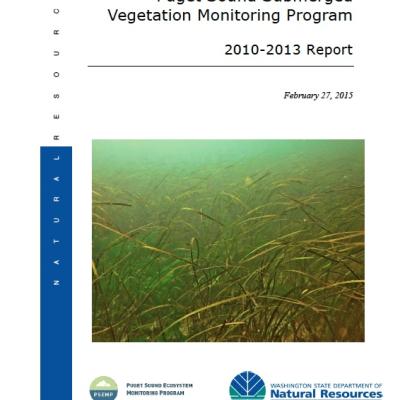
Status and trends for seagrasses in Puget Sound from 2010-2013
A 2015 report from the Washington State Department of Natural Resources summarizes the status and trends for native eelgrass and other seagrasses in Puget Sound from 2010-2013.
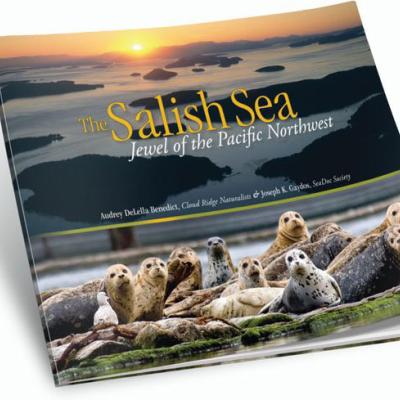
New book focuses on the natural history of the Salish Sea
The Salish Sea: Jewel of the Pacific Northwest brings together more than 230 extraordinary images of the Salish Sea. But don't call it a coffee table book. Its lush photos are backed by a serious scientific perspective on this complex and fragile ecosystem.
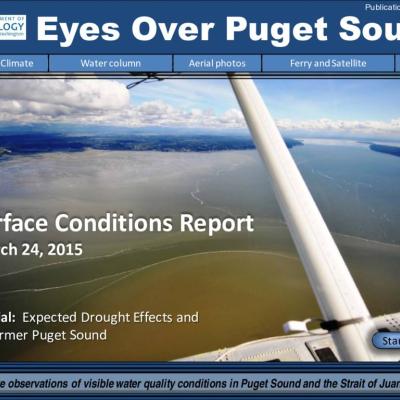
Eyes Over Puget Sound: Surface Conditions Report - March 24, 2015
Puget Sound is feeling the heat! Starting in October, temperatures are the highest on our record since 1989. Salinity and oxygen are much lower. Recent rains have rivers flowing high. Aerial views show dramatic sediment loads from rivers mixing into otherwise blue water. But don’t be fooled – by summer, snow-fed rivers are expected to run significantly below normal, with implications for Puget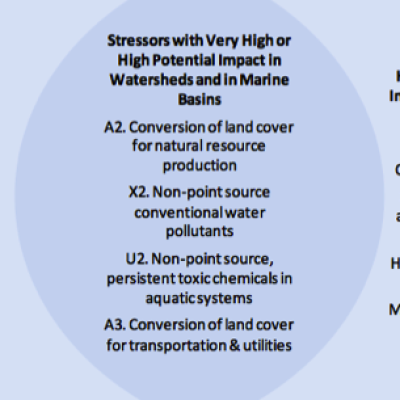
Ranking the greatest threats to Puget Sound: A summary of the 2014 Puget Sound Pressures Assessment
This paper summarizes a 2014 report ranking the greatest human-caused threats to the Puget Sound ecosystem.
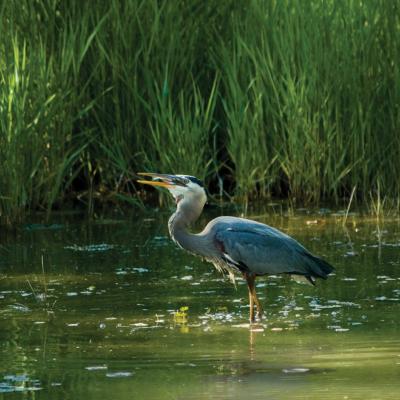
Top–down control by great blue herons regulates seagrass-associated epifauna
A 2015 paper in Oikos Journal examines the impacts of great blue heron predation on species diversity in eelgrass meadows in British Columbia.
Framework for prioritizing monitoring of CECs in the Pacific Northwest
The Puget Sound Ecosystem Monitoring Program (PSEMP), along with partners from the US EPA Columbia River Program and USGS Oregon Water Science Center, have developed a framework for prioritizing monitoring of Contaminants of Emerging Concern (CECs) in the Pacific Northwest.
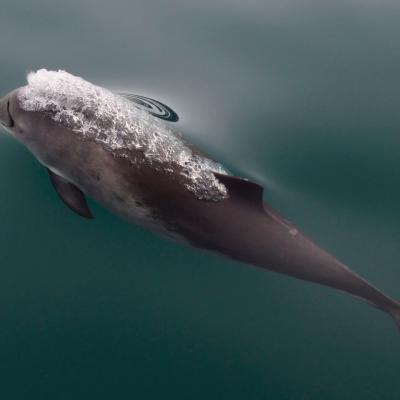
Living in the fast lane: rapid development of the locomotor muscle in immature harbor porpoises (Phocoena phocoena)
A study in the Journal of Comparative Physiology shows that muscle development necessary for diving can take several years to mature in harbor porpoises. Scientists argue that this may make immature harbor porpoises more vulnerable than adults to impacts from boat traffic or other disturbances.